
The Product: Helps Canadian Immigrants overcome language barriers and better understand medication usage, leading to improved health outcomes.
Target User: Our focus is on individuals grappling with English as their second language during medication acquisition and management.
My Role: Sole UX/UI Designer
Timeline: September 2020 - February 2021
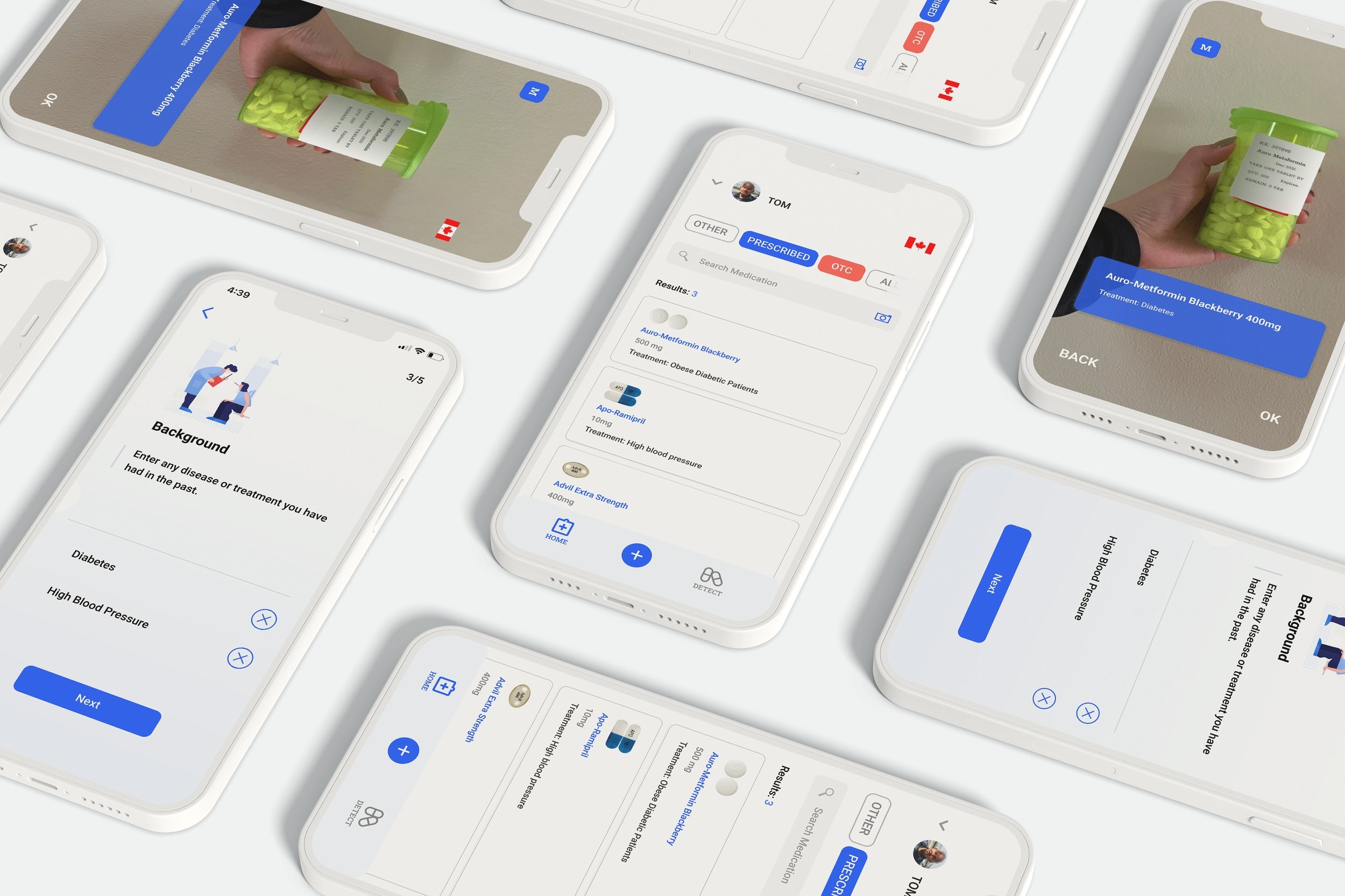
Overview
MEDUCE
Problem Space + User Group
Managing medications can be difficult, especially for individuals who take multiple medications or have limited health literacy or language proficiency.
In Canada, as of 2021, the immigrant population accounted for approximately 8.9 million people, making up around 23.7% of the total population.
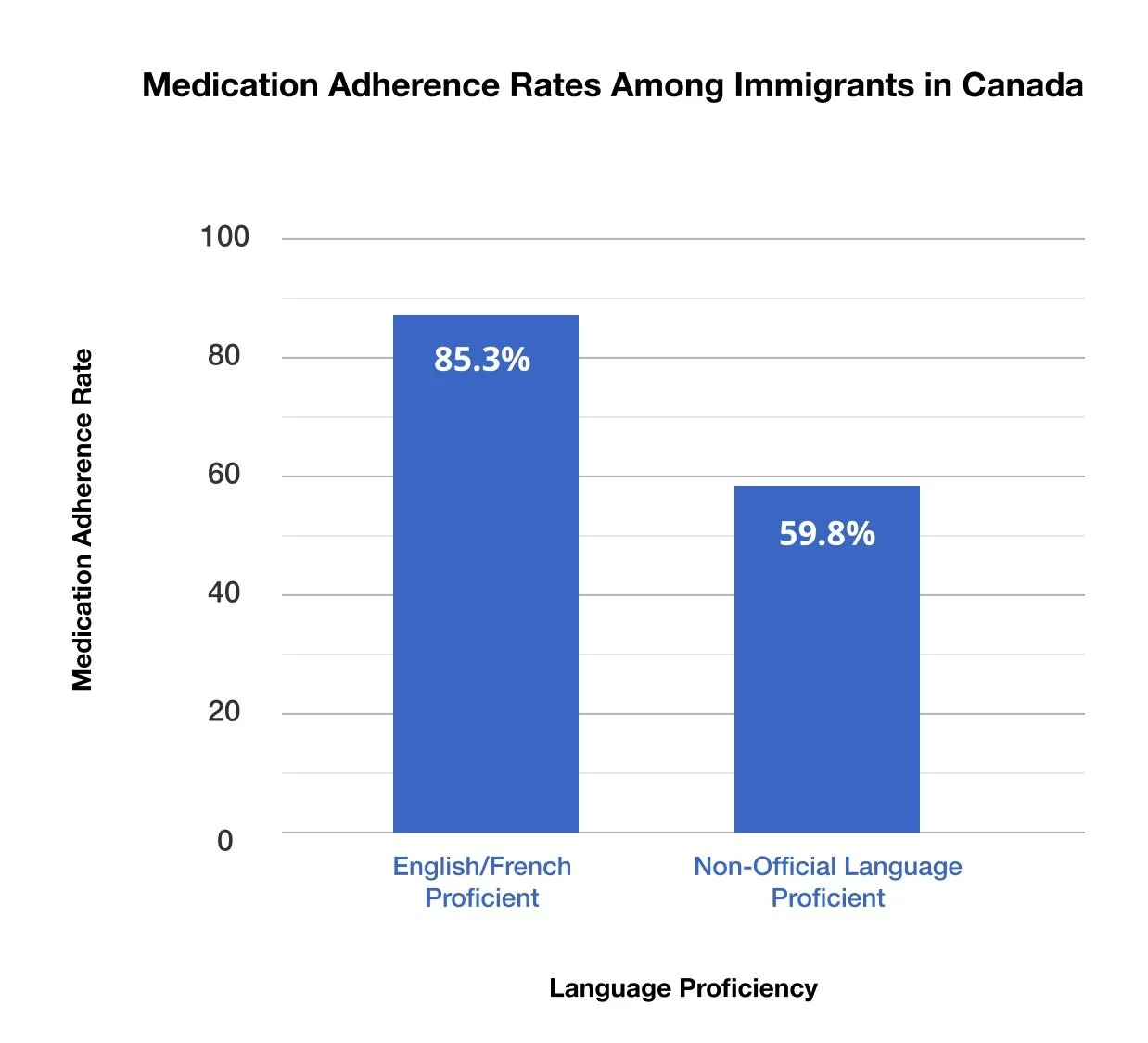
Who Will Meduce Benefit?
Based on user research insights, I established four goals to drive the development process. These goals consider a diverse user base, including children of immigrants, immigrants of all ages, healthcare professionals, and individuals interested in actively participating in their medication-taking process.
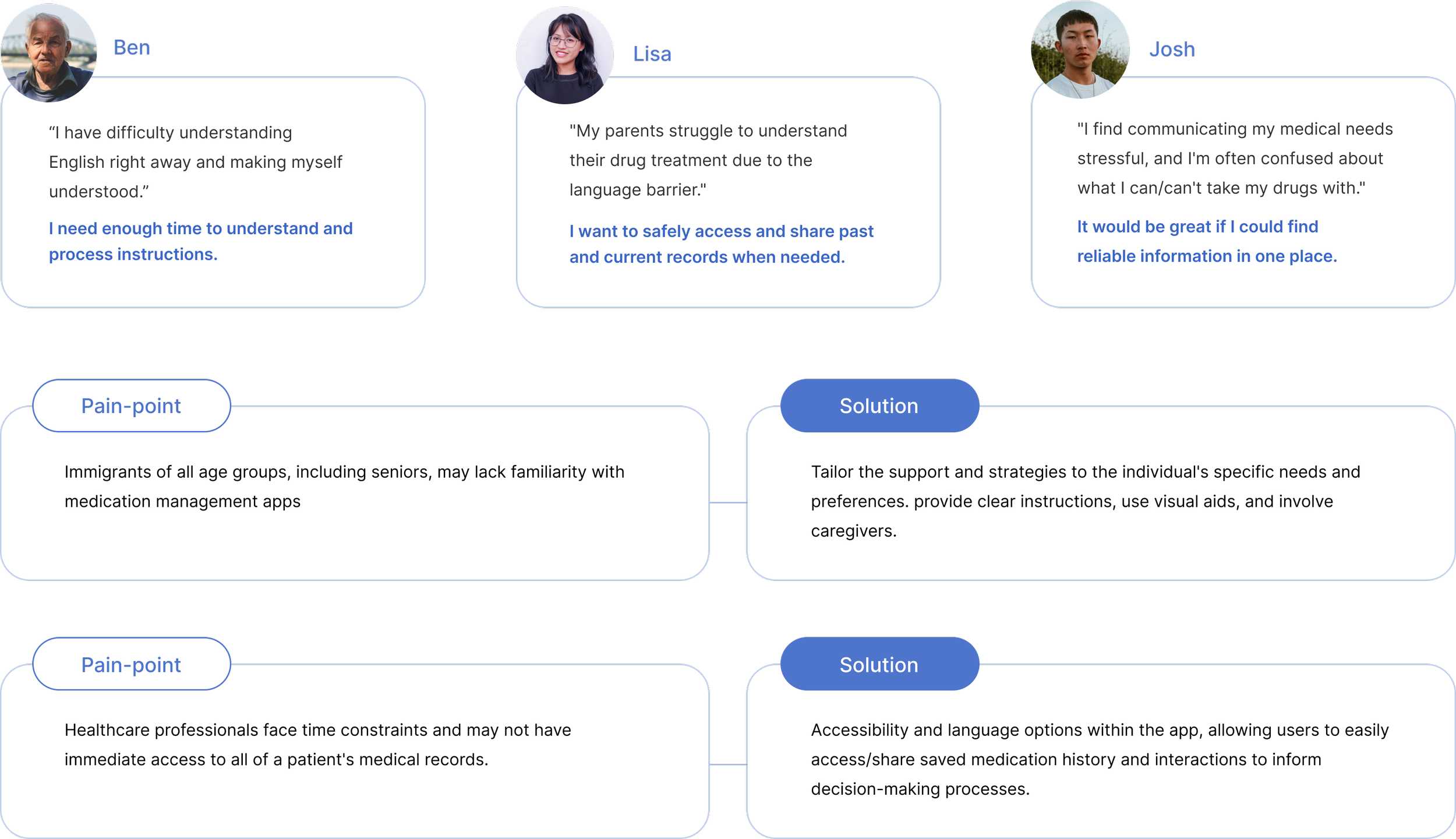
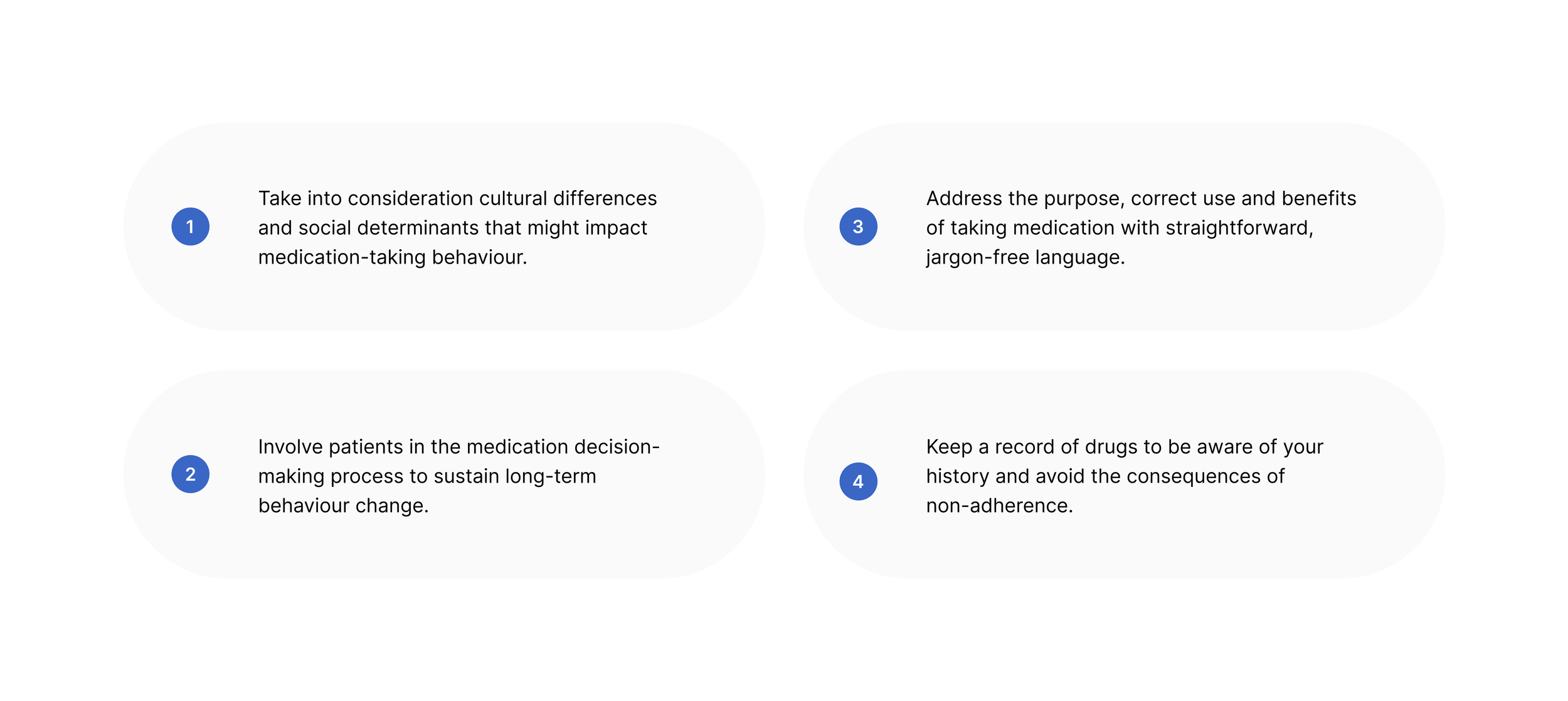
Goals
Generative Research:
Conducted comprehensive field research, interviews, and online surveys.
Key Findings:
No existing apps directly cater to the language barrier issue for our target user group.
Observation of the entire journey from drug prescription to consumption revealed existing apps primarily focus on features like pill tracking, reminders, refills, or connecting users with healthcare professionals, falling short of addressing the unique needs of users with language barriers.
Canada's sizable immigrant population, many facing language challenges, particularly heightened during the pandemic where medical interactions shifted to phone calls.
Remote medical appointments and prescriptions over the phone accentuated communication difficulties, underscoring the critical need for an improved solution to address these language barriers.
Photos taken during user interviews : Amount of pills taken daily, translations on bottles, long instructions
Insight: During my interviews, I noticed that people had developed their own preferred methods for managing prescribed medications, which they found comfortable and familiar. However, relying solely on written instructions on pill bottles became challenging due to the need for constant updates with each new prescription. This led me to consider an approach that integrates physical pill bottles, resulting in the idea of "scan and find."
The Design Process
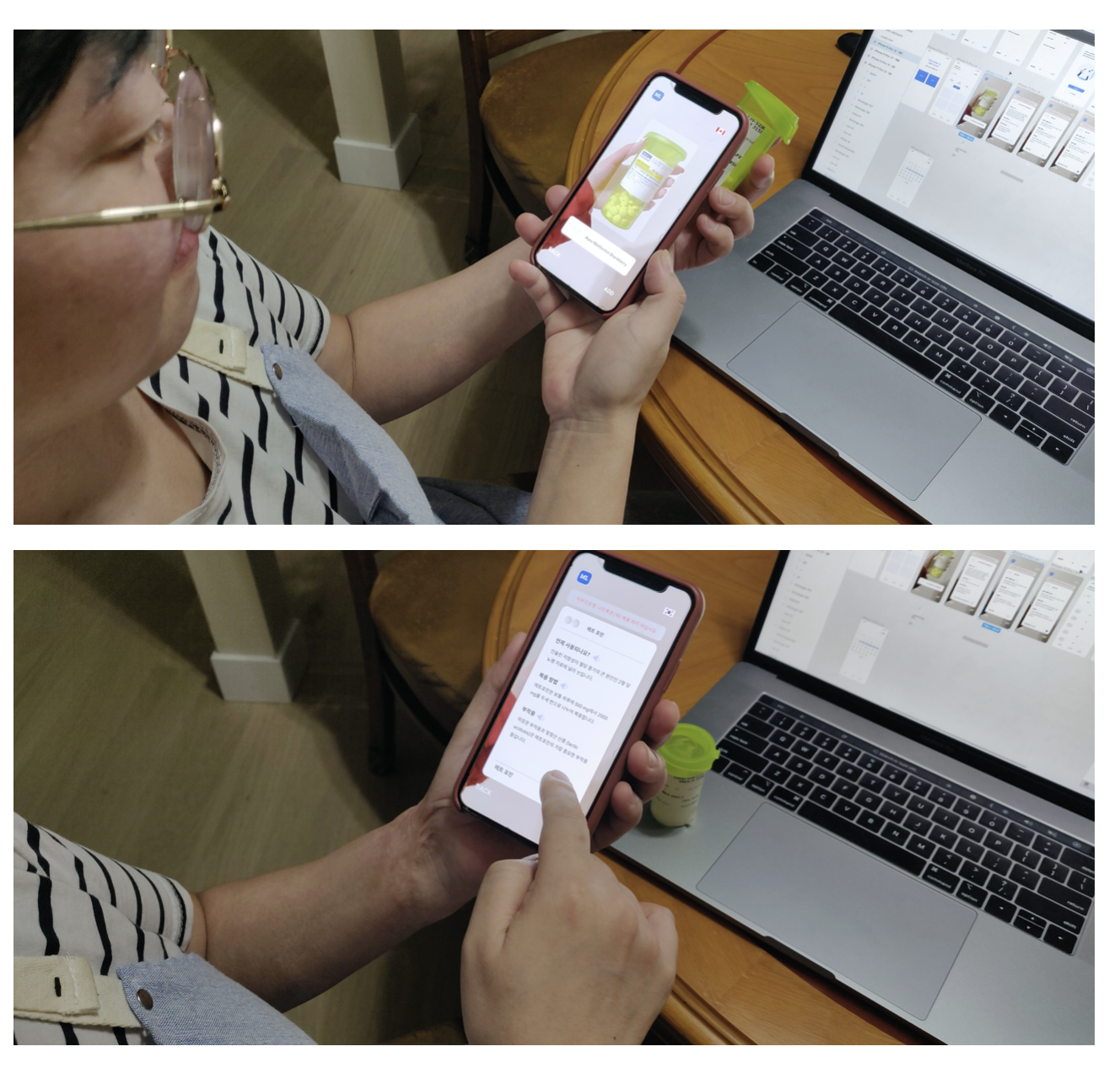
I continued to sketch, collaborate, iterate and test to improve my design with feedback from peers, potential users, and mentors.
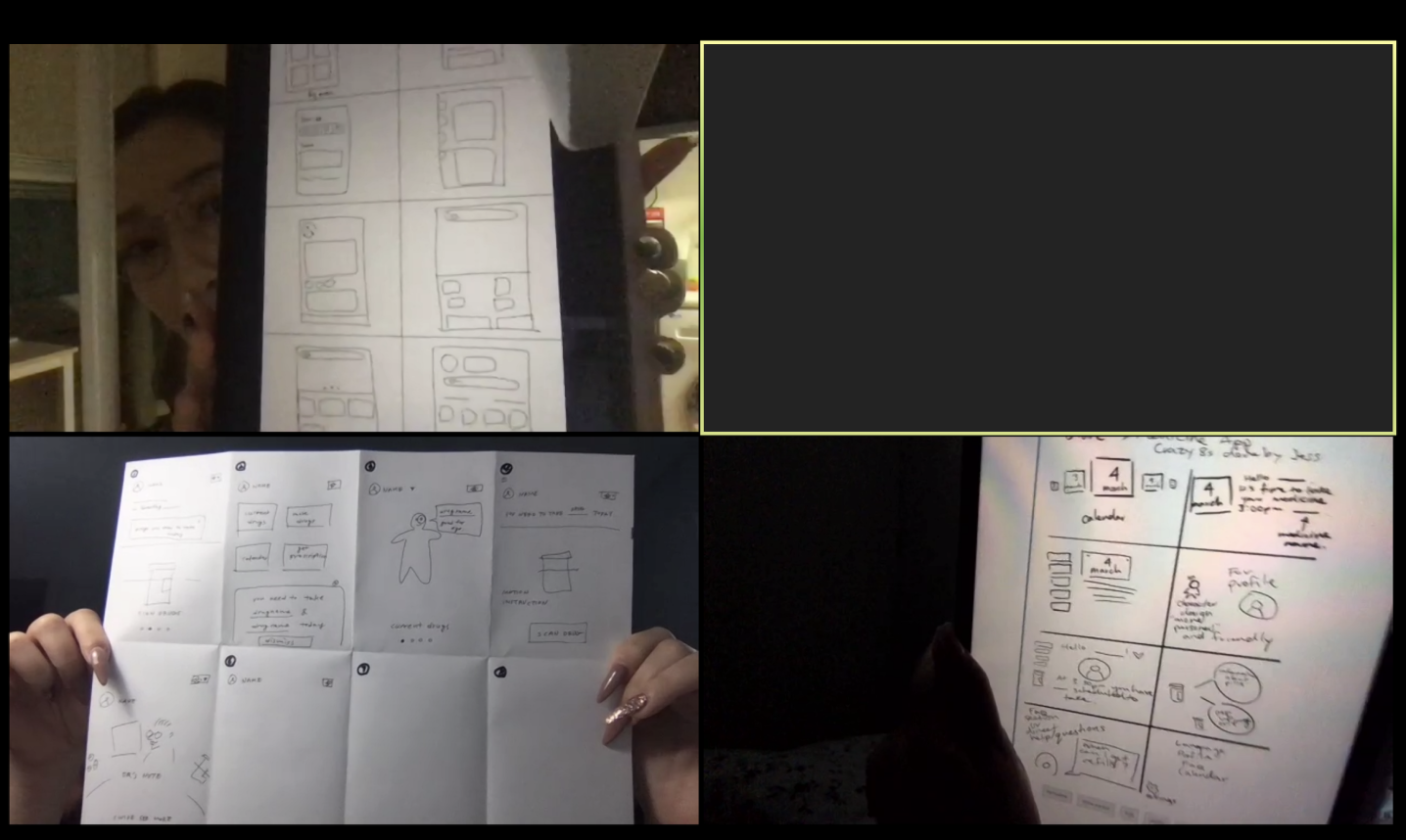
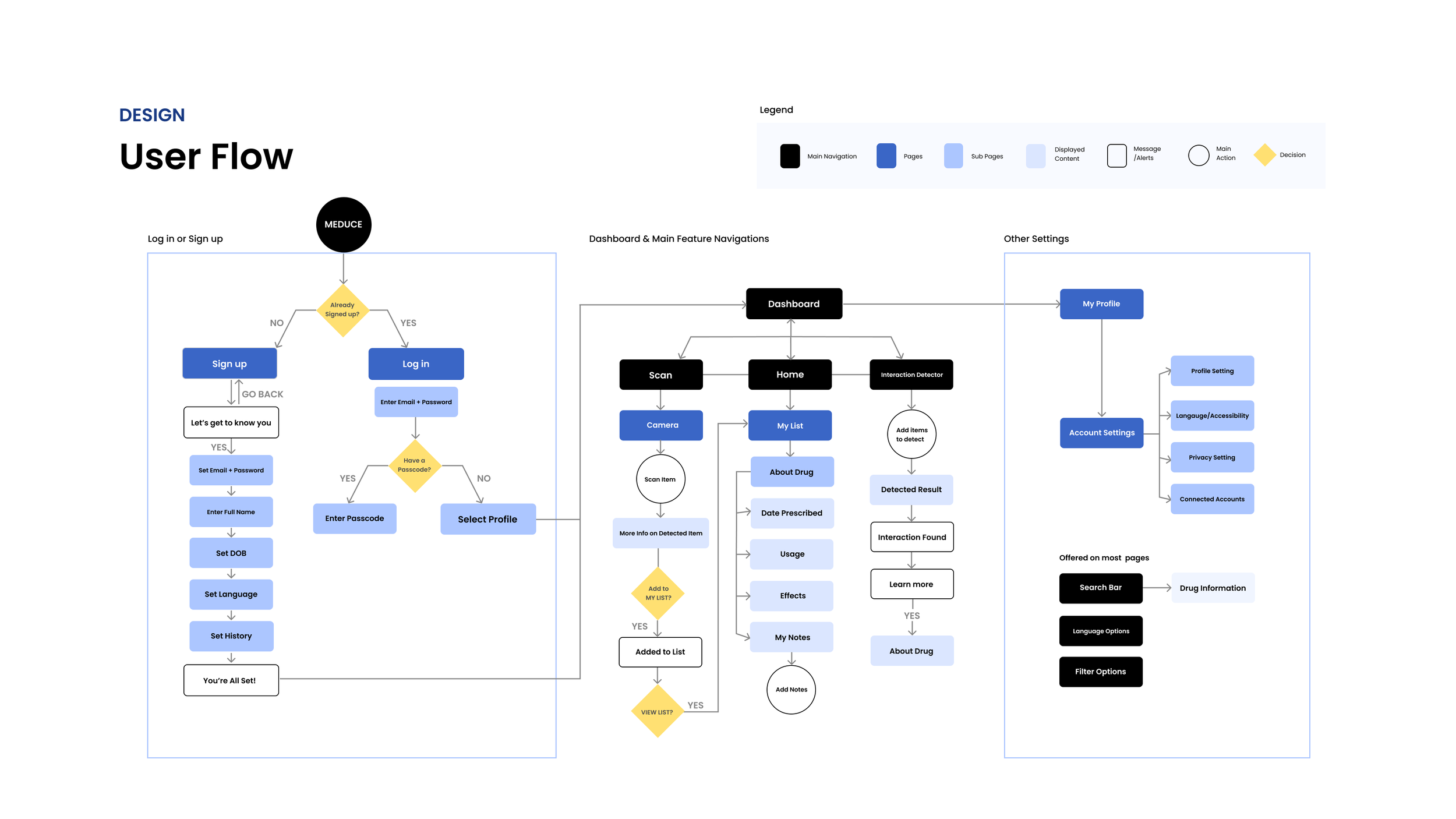
Group sketching session, wireframes, user testing to design screens and user flows.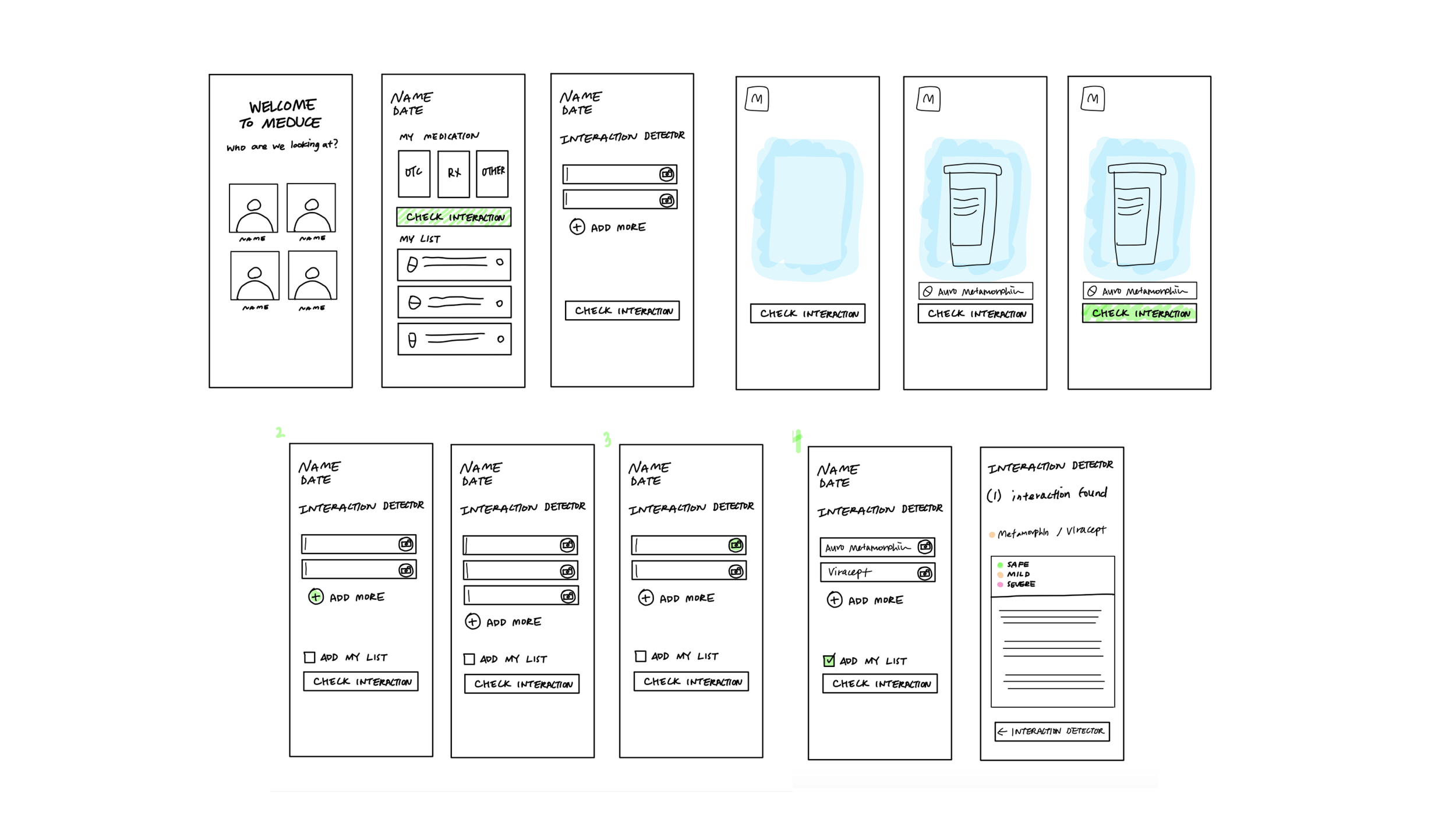
Outcome
Meduce, a project I passionately developed at Emily Carr University, earned an honourable mention in the Health and Innovation Awards at the 2021 Grad Show. Motivated by my parents' struggles with English as their second language and witnessing the profound impact firsthand, I dedicated myself to transforming Meduce into a product that genuinely meets the needs of many.
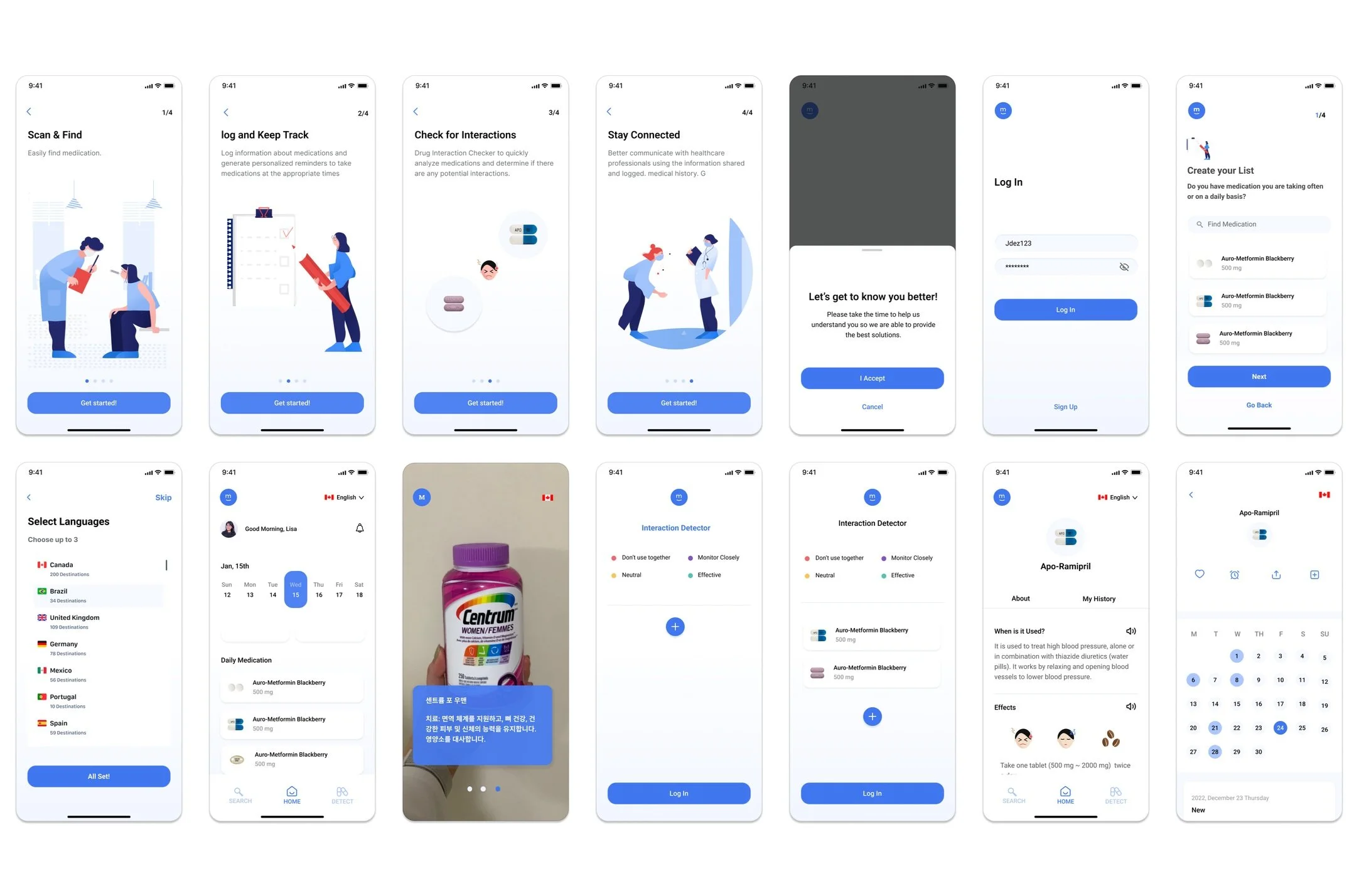
Solution: A More Efficient and Personalized Way to Manage Medications
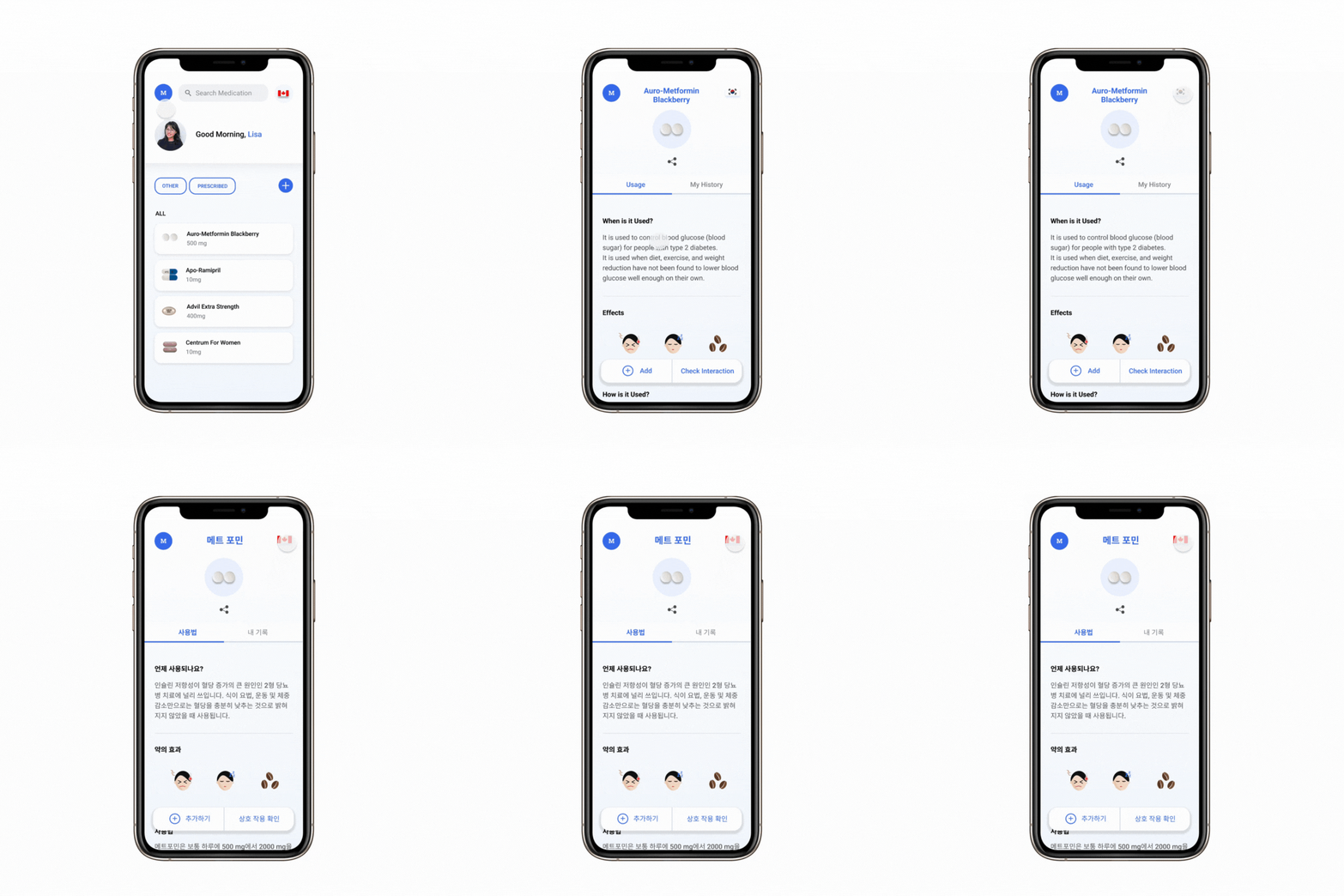
1. Easily Switch Between Saved Languages
Meduce ensures that users feel safe and well-informed throughout their drug treatment. It offers real-time text translation to help users understand crucial medication details and instructions accurately.
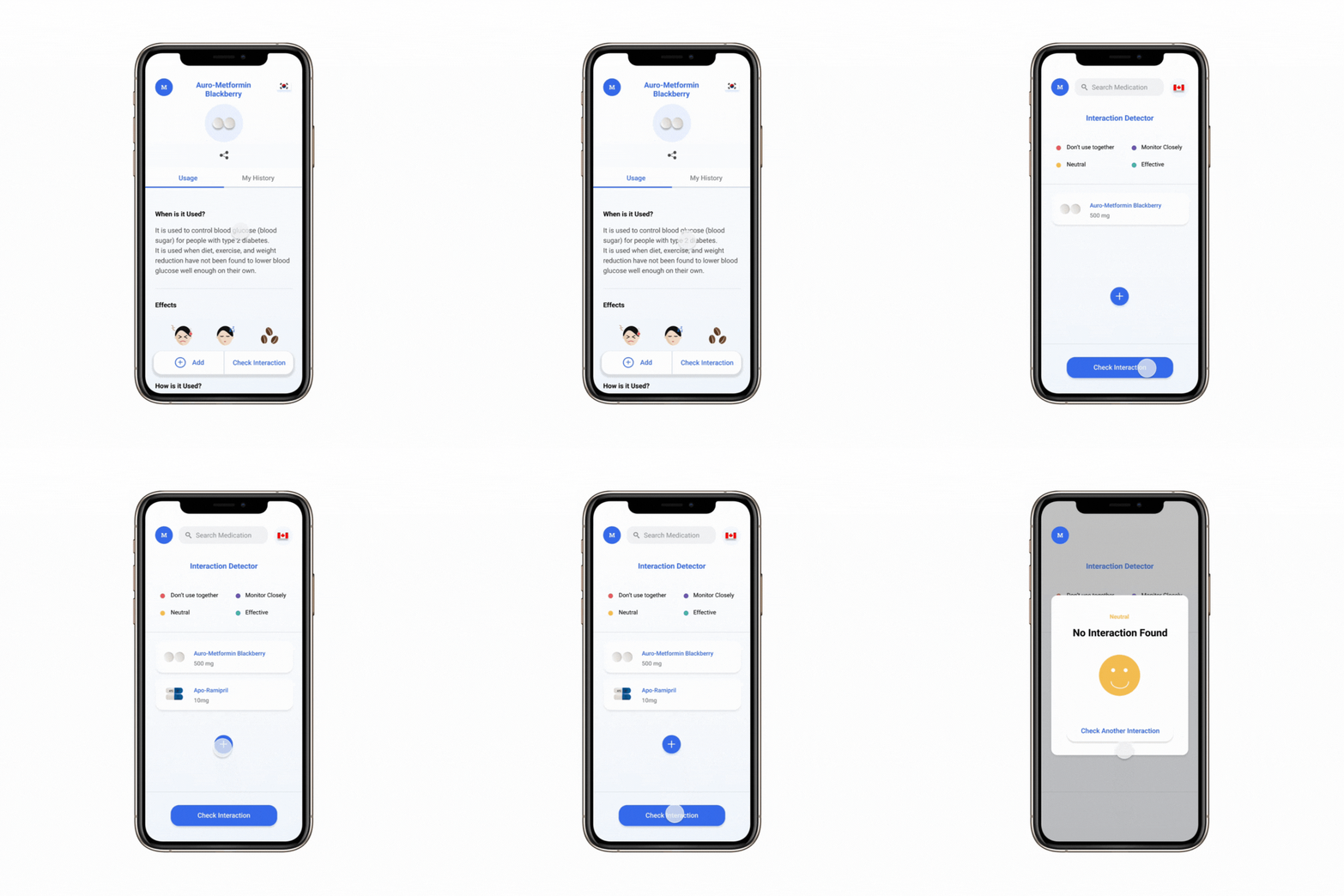
3. Safely Check for Drug Interactions
Meduce enables users to search and input medications, identifying potential interactions between them. By saving their medications and medical history, users can uncover and prevent any harmful medication interactions, even those they may not have been aware of previously.
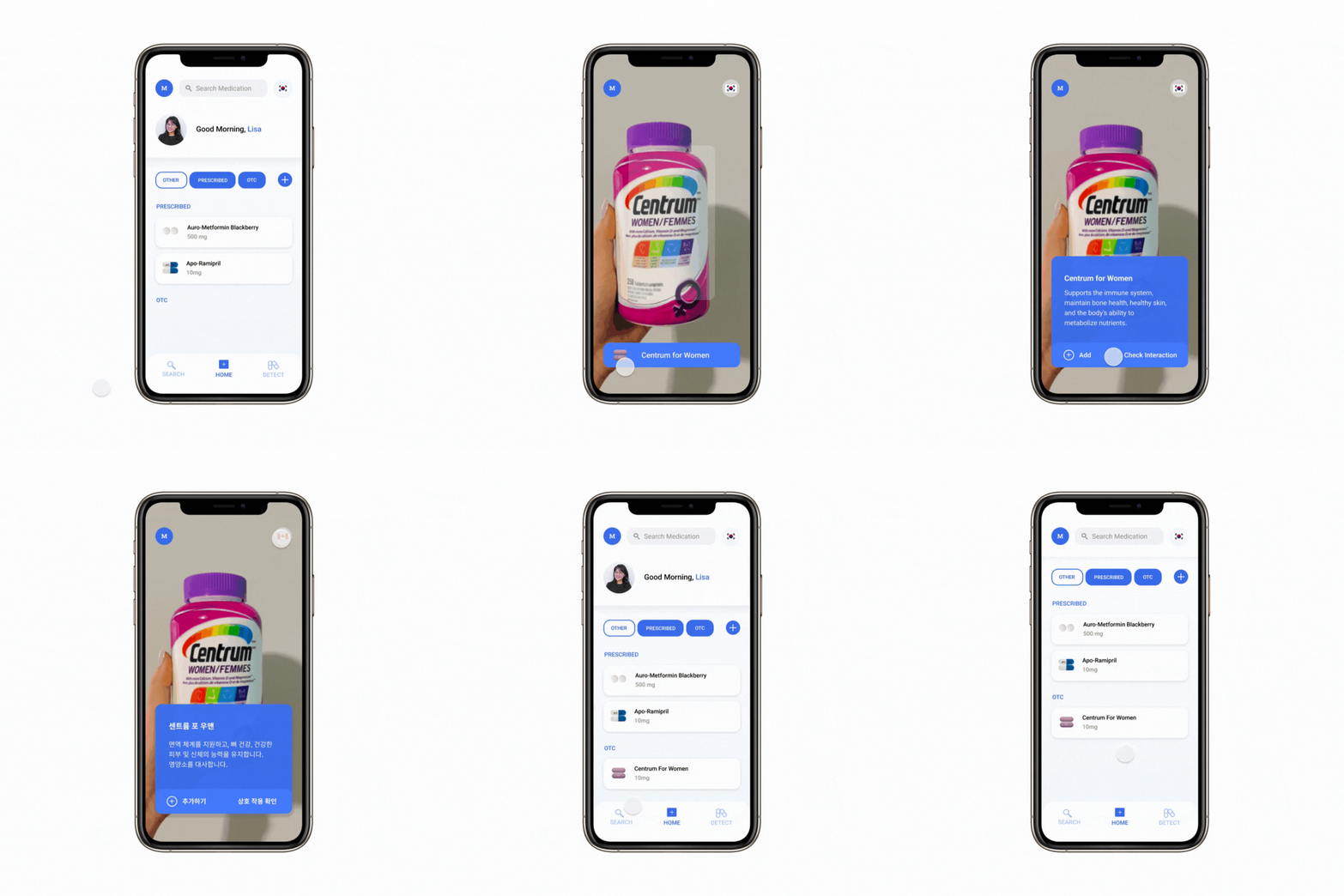
2. Scan and Find
Meduce enables users to easily and efficiently find the information they need, reducing worries about receiving incorrect medication or encountering inaccurate information. It also helps users grasp the essential details of their medication.
Introductory Video Created During Midterm
A short video was created to share ideas.
Disclaimer: The design was continuously developed after this and is not the final representation/design of the product.
Outcome
Meduce was designed to protect immigrants' health and enhance their access to healthcare services. It achieves this by providing medical information in an easy-to-understand format, using simple language, and incorporating visual aids. To optimize usability and accessibility, Meduce maintains a clean, simple, and consistent design language, allowing users to consume a significant amount of information effectively.
Final Thoughts + Key Lessons
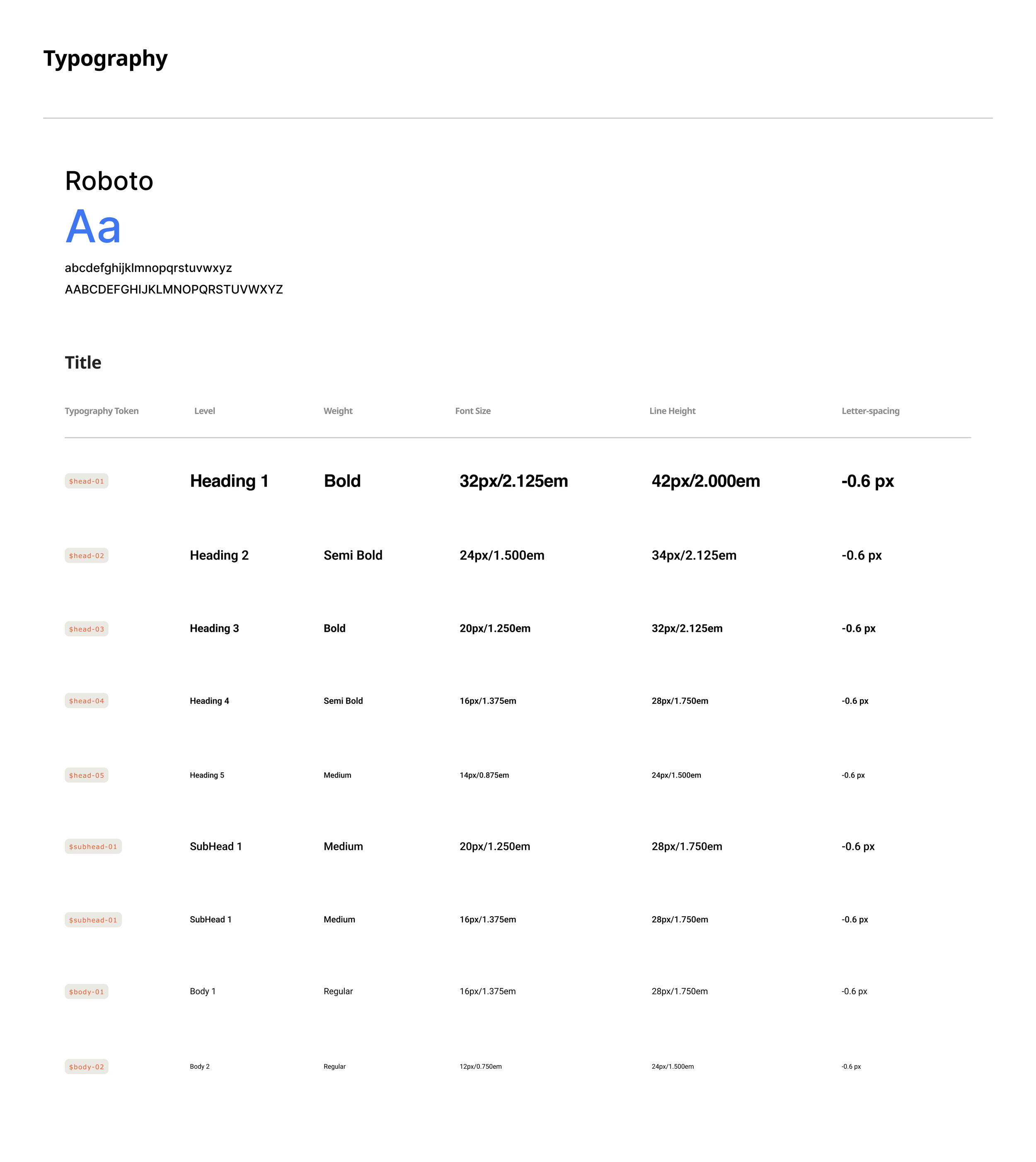
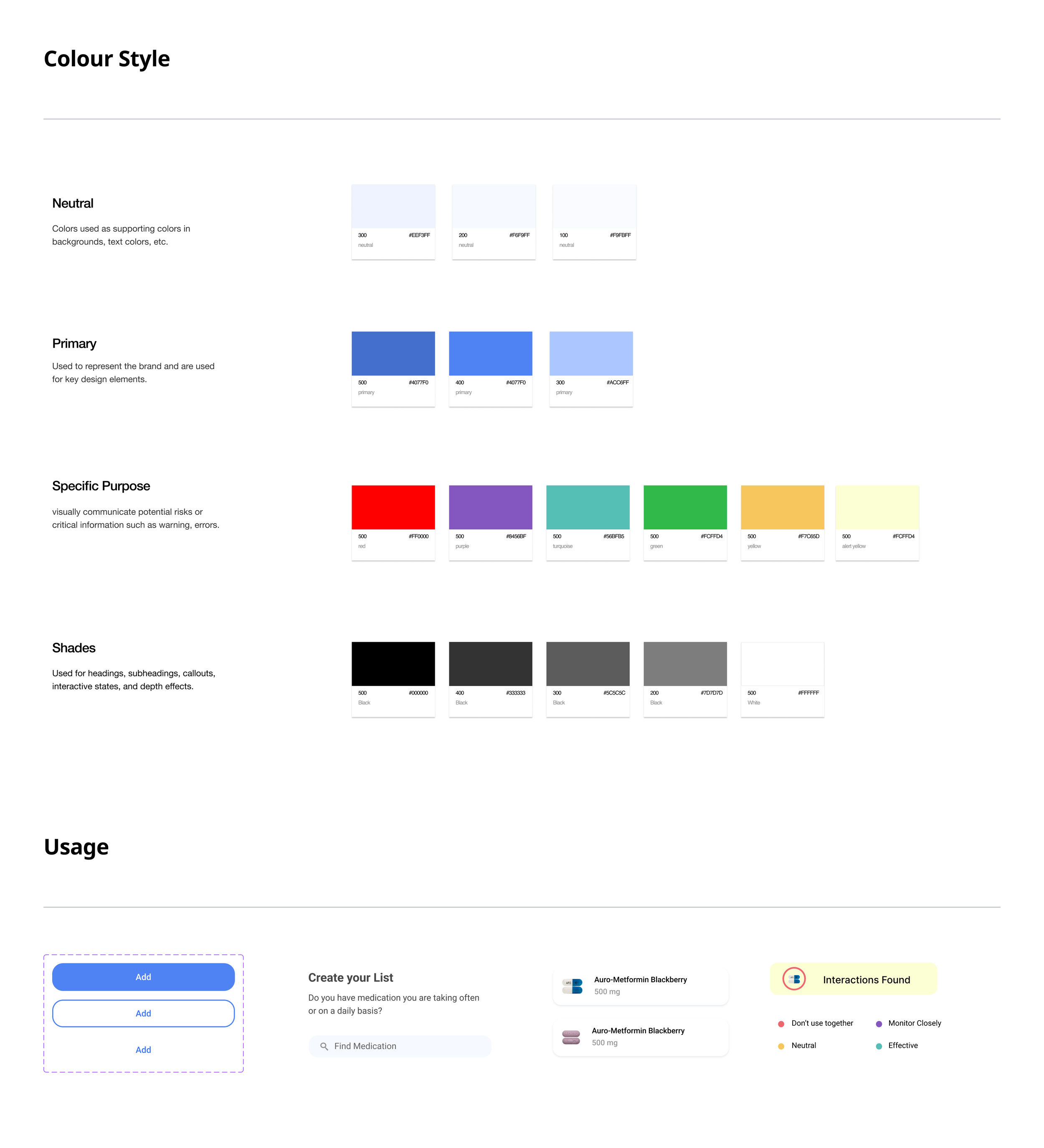
A Design System is Essential - In the case of creating an app for managing medication and improving health literacy a well-designed system can help build trust and confidence among users using the app that can directly influence their own health.
User Involvement at Every Step - Throughout the project, I constantly reminded myself that "I am not the user," ensuring that I avoided making assumptions about what would or wouldn't work. Instead, I actively sought out input from actual users, valuing their insights and involving them in the design process.
Prioritize Depth over Breadth - At times, I found myself attempting to address every minor issue that arose, resulting in an overwhelming amount of information. While it is important to consider diverse user needs and reach as many people as possible, I made a conscious effort to stay focused and define what truly mattered to the user, guided by valuable insights.
Embrace Flexibility - As this project unfolded during the COVID-19 restrictions, both users and I had to adapt to new research and testing methods. This experience taught me the importance of flexibility and the need to navigate real-world situations as they arise, making necessary adjustments and remaining adaptable throughout the process.