
MEDUCE
A mobile application service designed to help immigrants in Canada overcome language barriers and better understand medication usage, leading to improved health outcomes.
Target Users: Immigrants of Canada
My Role: Sole UX/UI Designer
Timeline: September 2020 - February 2021
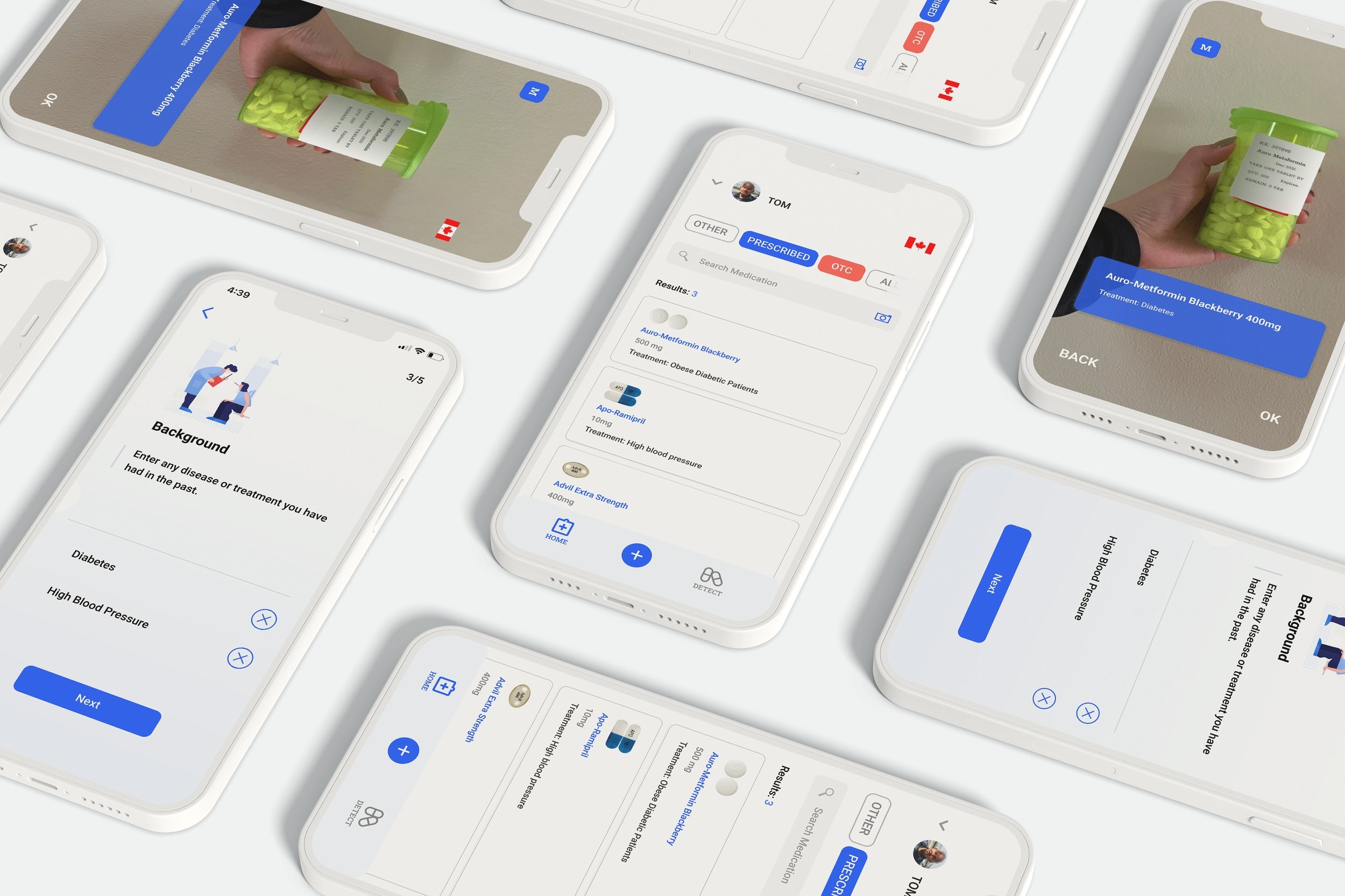
Project Overview
Meduce was a project I worked on at Emily Carr University that received an honourable mention in the 2021 Grad Show. This was a project that really increased my passion for research. Having parents who struggle with English as their second language, and as someone who has seen the scale of this problem so close by, I was continuously motivated to develop it into a product that I genuinely believe will fulfill the needs of many people.
Problem Space
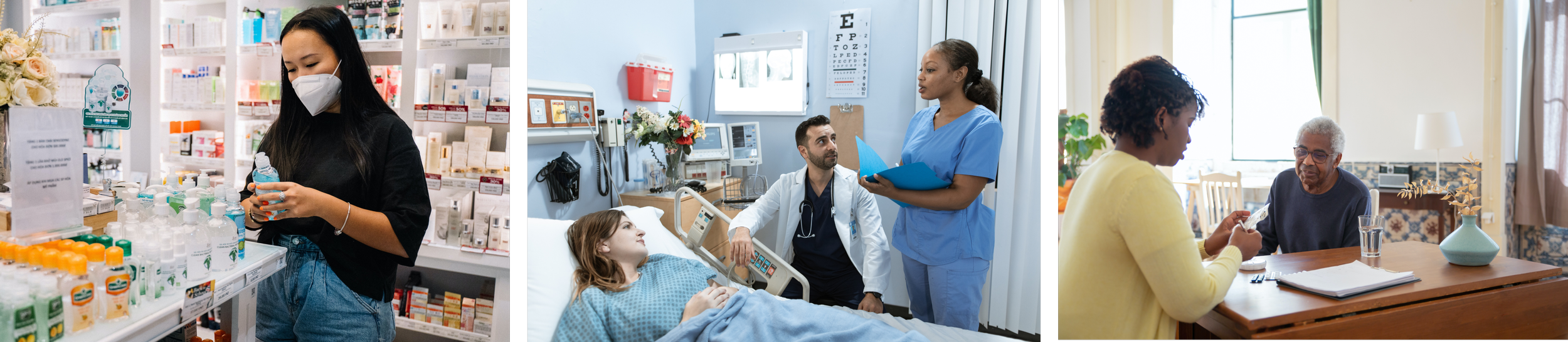
Managing medications can be difficult, especially for individuals who take multiple medications or have limited health literacy or language proficiency. In Canada, as of 2021, the immigrant population accounted for approximately 8.9 million people, making up around 23.7% of the total population.
User Group
Canada has a large immigrant population, with a significant portion facing challenges related to English proficiency. During the pandemic, restrictions led to medical appointments and drug prescriptions being conducted over phone calls. This made it difficult for many individuals to effectively communicate their medical needs. This highlighted the importance and necessity for a new and improved experience in addressing these communication barriers.
Insight: During my interviews, I noticed that people had developed their own preferred methods for managing prescribed medications, which they found comfortable and familiar. However, relying solely on written instructions on pill bottles became challenging due to the need for constant updates with each new prescription. This led me to consider an approach that integrates physical pill bottles, resulting in the idea of "scan and find."
Generative Research: Field Research, Interviews, Online Surveys
Key Findings: Currently, there aren’t apps out there that directly address the issue for our user group. After observing the entire journey from drug prescription to consumption. Apps that were being used mainly focused on features such as pill tracking, reminders, refills or directly connecting users to healthcare professionals, which do not fully address the needs of users with language barriers.
The Design Process
I continued to sketch, collaborate, iterate and test to improve my design with feedback from peers, potential users, and mentors.
Who Will Meduce Benefit?
Based on user research insights, I established four goals to drive the development process. These goals consider a diverse user base, including children of immigrants, immigrants of all ages, healthcare professionals, and individuals interested in actively participating in their medication-taking process.
Outcome
Meduce was designed to protect immigrants' health and enhance their access to healthcare services. It achieves this by providing medical information in an easy-to-understand format, using simple language, and incorporating visual aids. To optimize usability and accessibility, Meduce maintains a clean, simple, and consistent design language, allowing users to consume a significant amount of information effectively.
Final Thoughts + Key Lessons
A Design System is Essential - In the case of creating an app for managing medication and improving health literacy a well-designed system can help build trust and confidence among users using the app that can directly influence their own health.
User Involvement at Every Step - Throughout the project, I constantly reminded myself that "I am not the user," ensuring that I avoided making assumptions about what would or wouldn't work. Instead, I actively sought out input from actual users, valuing their insights and involving them in the design process.
Prioritize Depth over Breadth - At times, I found myself attempting to address every minor issue that arose, resulting in an overwhelming amount of information. While it is important to consider diverse user needs and reach as many people as possible, I made a conscious effort to stay focused and define what truly mattered to the user, guided by valuable insights.
Embrace Flexibility - As this project unfolded during the COVID-19 restrictions, both users and I had to adapt to new research and testing methods. This experience taught me the importance of flexibility and the need to navigate real-world situations as they arise, making necessary adjustments and remaining adaptable throughout the process.