
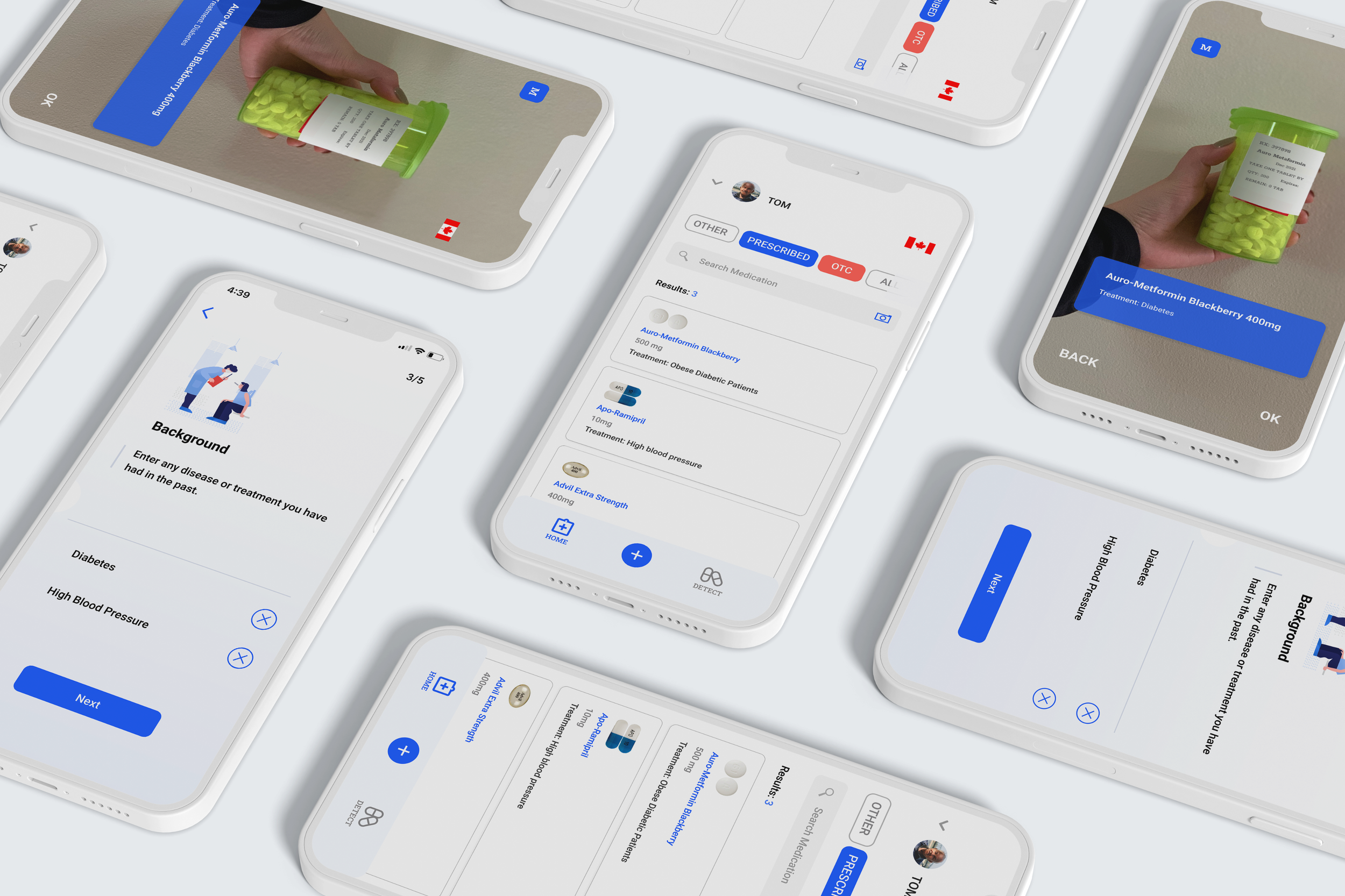
MEDUCE
Project Timeline - September 2021 - March 2022
Project by Diane Shin - Sole UX/UI Designer
Tools Used - Figma, Adobe Illustrator
Meduce is a mobile app designed to help Canadian immigrants overcome language barriers and better understand medication usage, leading to improved health outcomes. It provides medical information in a user-friendly format, increasing medication adherence and ensuring safe and proper management.
The project received an honourable mention in the 2021 Grad Show at Emily Carr University.
Background
Canada has one of the highest proportions of immigrants in the world and a significant portion of this population struggle with English proficiency. As of 2021, the immigrant population in Canada was approximately 8.9 million people, which represents about 23.7% of the country's total population.
During the pandemic, with restrictions in place, most appointments and drug prescriptions were happening through phone calls. It became harder for many people to communicate their medical needs through the phone. The value and the need for a new experience became more visible.
Language Barriers have an Effect on Medication Adherence Rates among Immigrant Patients.
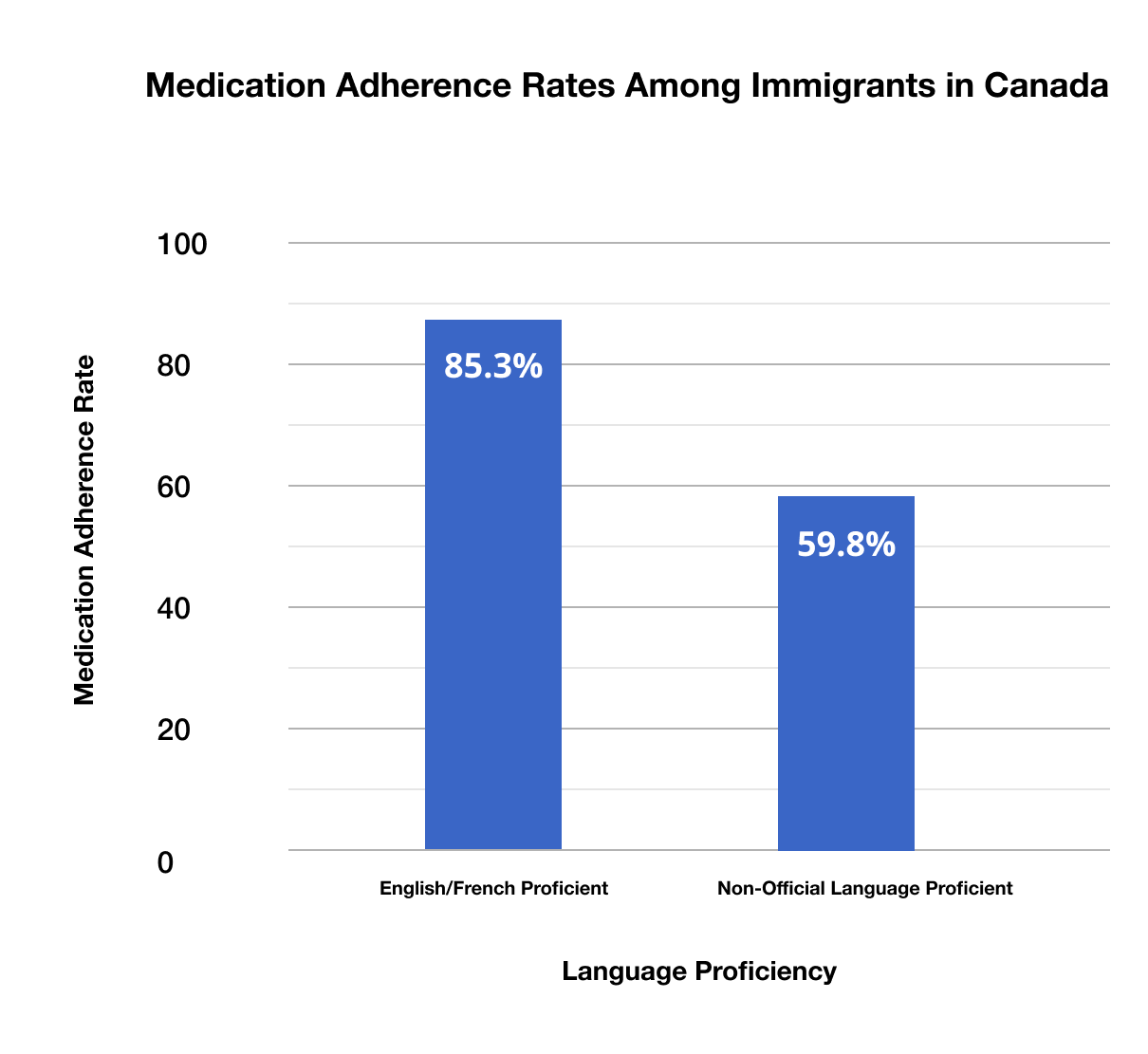
This chart is based on data from a study conducted by the Public Health Agency of Canada (PHAC) titled "Health Status of and Access to Healthcare by Recent Immigrants to Canada."
The goal was to not just repeat another reminder or alarm app,
but rather design a comprehensive tool to help people despite language barriers, effectively manage their medication and improve their health outcomes.
Since everyone has different medication schedules and methods that are comfortable to them MEDUCE can also be used as a record-keeping tool.
a reliable source that is personalized to the user.
It can help users distinguish which medications they need to take and which ones they shouldn't take by providing information on whether it's safe to take additional medication alongside existing ones.
SOLUTION BASED ON CORE VALUES
An Experience Based on Inclusivity, Literacy, and Accessibility
We can measure the success of a design only when it reaches the user. When it’s accessible. Designing for Accessibility and Inclusion is not just a concept for the minority or people with disabilities. I believe that It’s about making considerate decisions to maximize ease of use for more people so it can be easily approached and used. To equally benefit from using a product.
Meduce is designed to help guide those who struggle with understanding their medication.
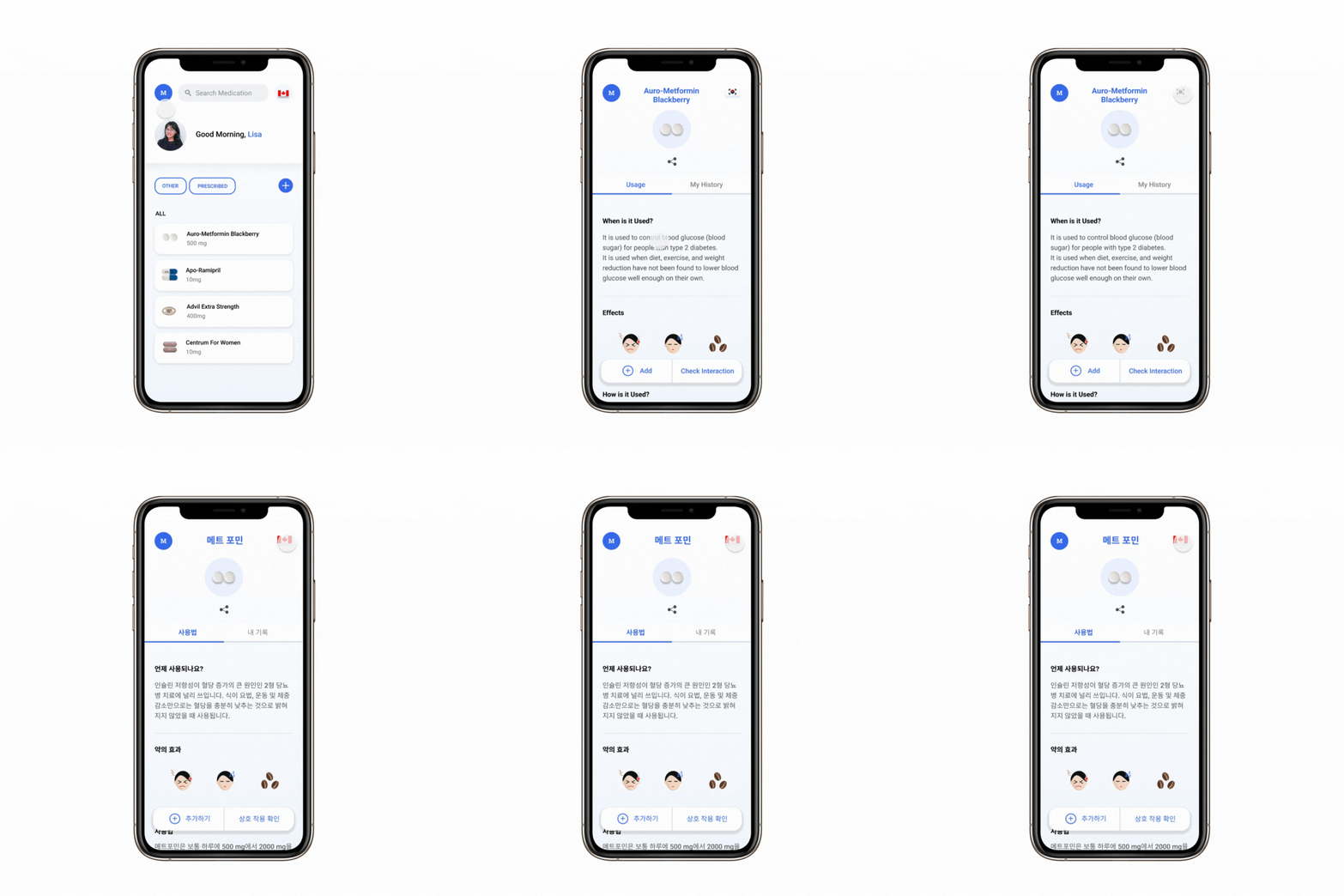
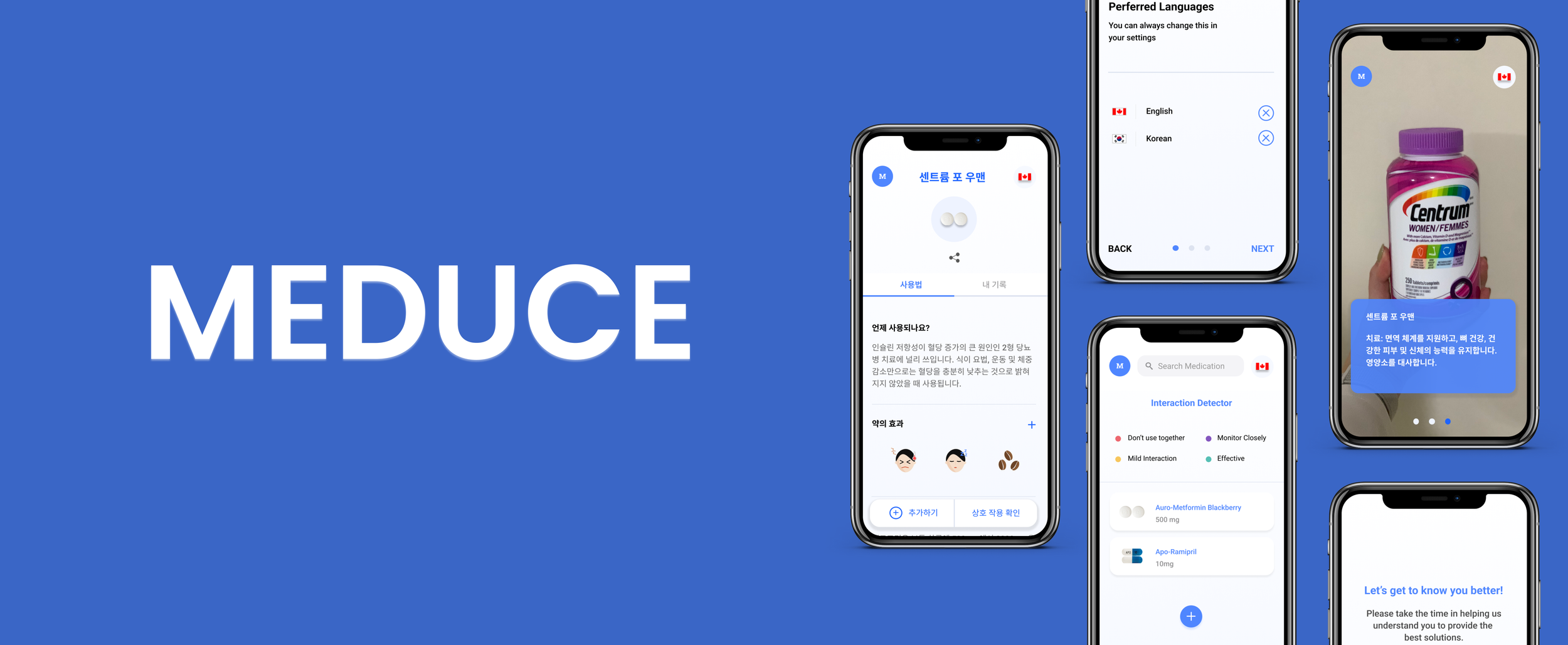
Easily Switch Between Saved Languages
Meduce breaks down barriers in language, so all users feel safe and knowledgeable during their drug treatment process.
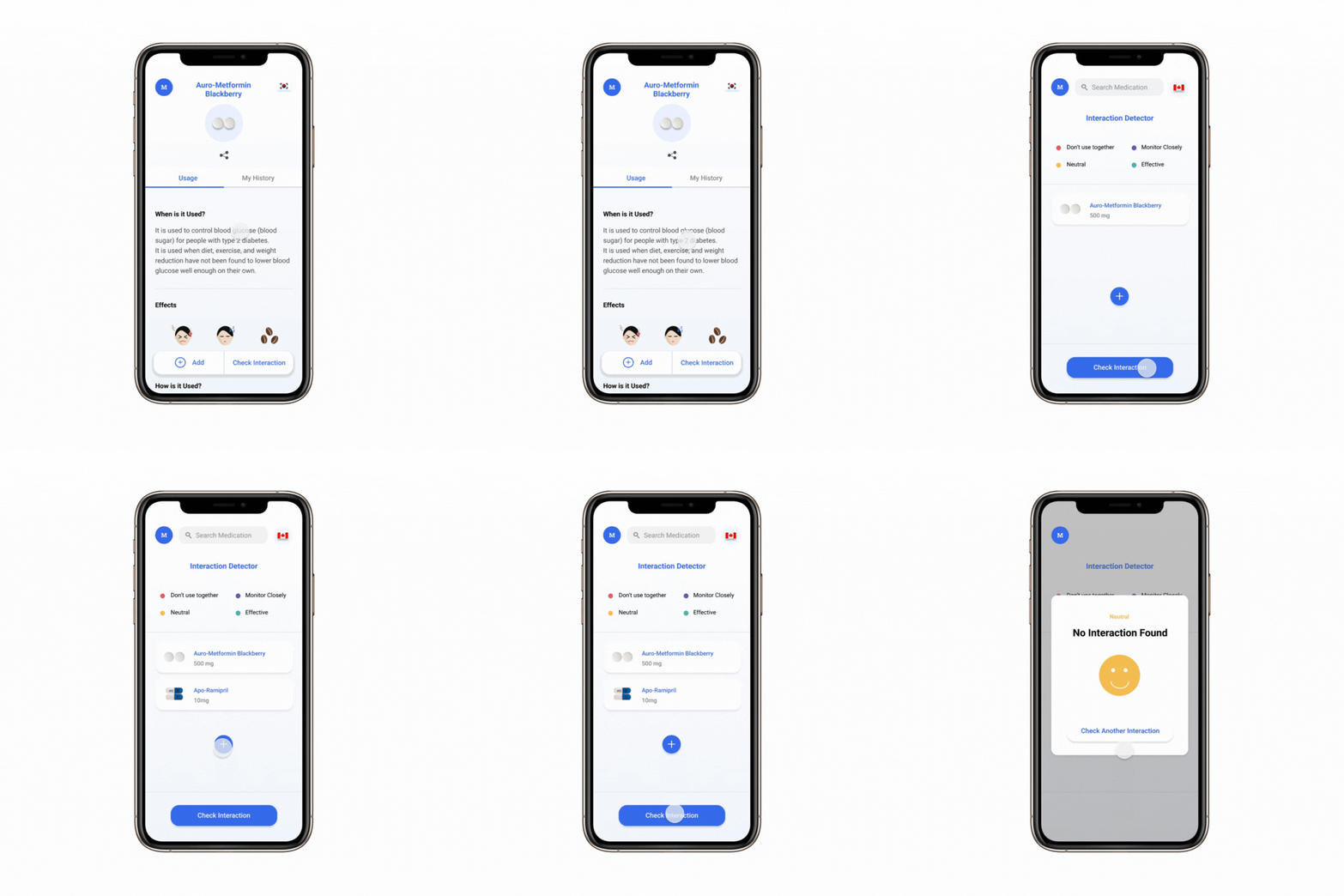
Safely Check for Drug Interactions
Users can check for any drug interactions in one place to avoid mistreatment.
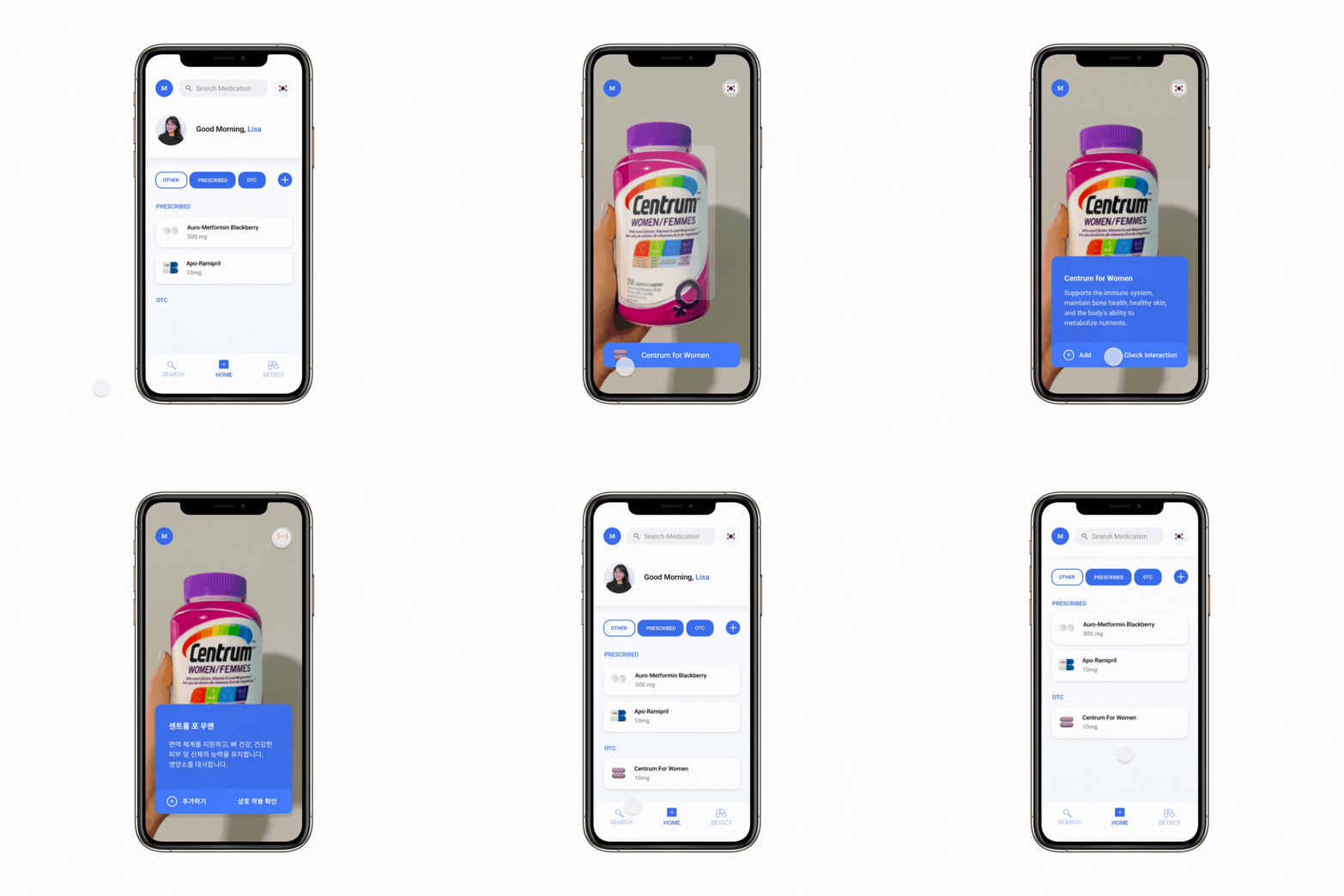
Scan, Find & Log
It can be hard to remember, search and find the correct drug. Users can accurately search and quickly check for any interactions.
Research
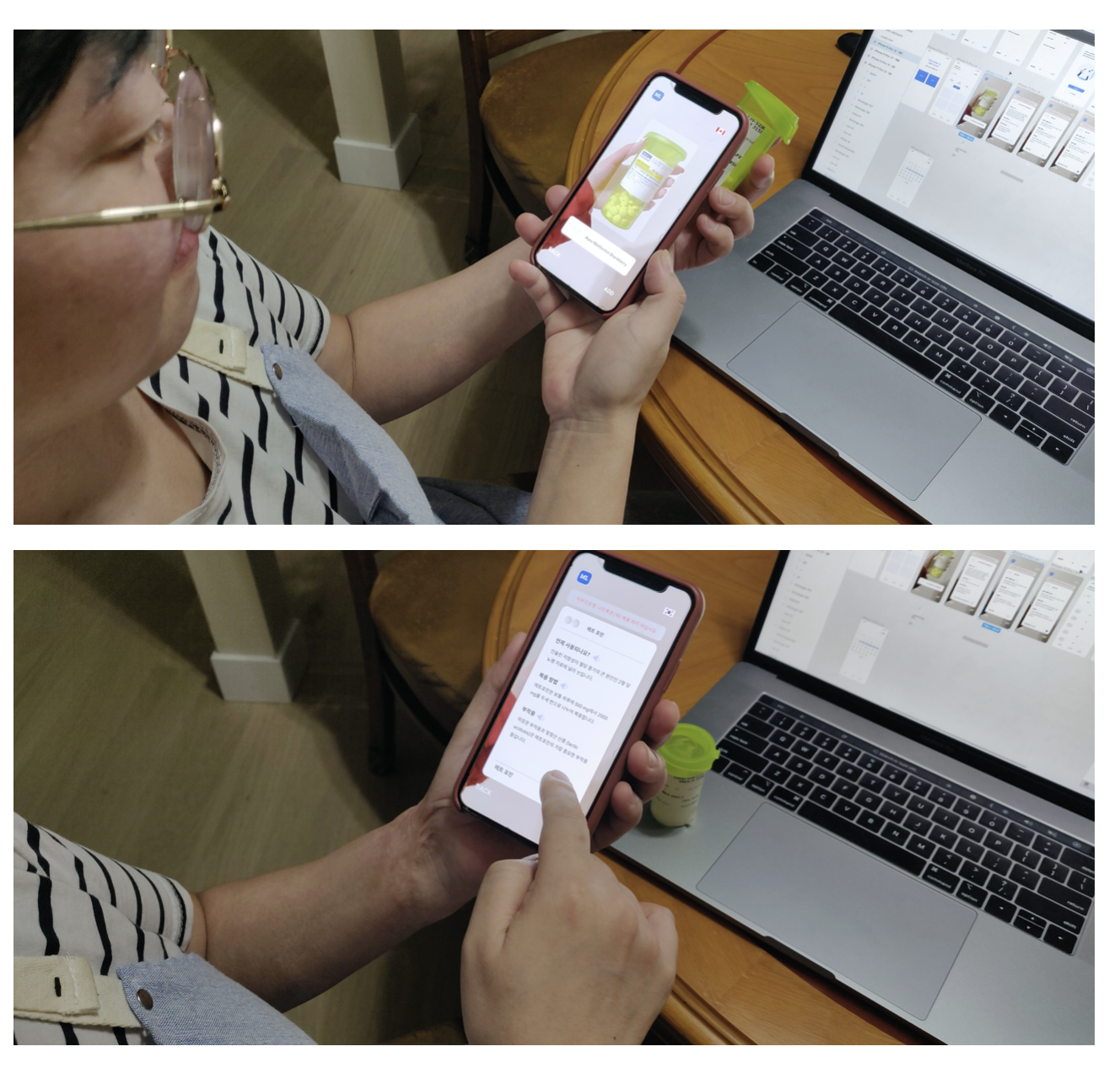
User Interviews: I conducted user interviews and observed the entire journey from drug prescription to consumption. Most users already had ways of handling their prescribed medicines that were comfortable for them. through my findings, I narrowed down features that would not change but enhance the daily routines of people who struggle with language.
Photos taken during user interviews : Amount of pills taken daily, translations on bottles, long instructions
Comparative Analysis: I looked at how some competitors handle similar and related issues. (Involving patients in their medication-taking journey)
Most focused on pill tracking, reminding, refills or directly connecting users to health care professionals. (Did not solve the problem defined for this project directly.)
Expert Interviews: I reached out to medical professionals through calls and emails. They provided me with reliable data and informed me how the problem was solved by themselves and by patients/customers in different situations
Setting Insight-Driven Goals
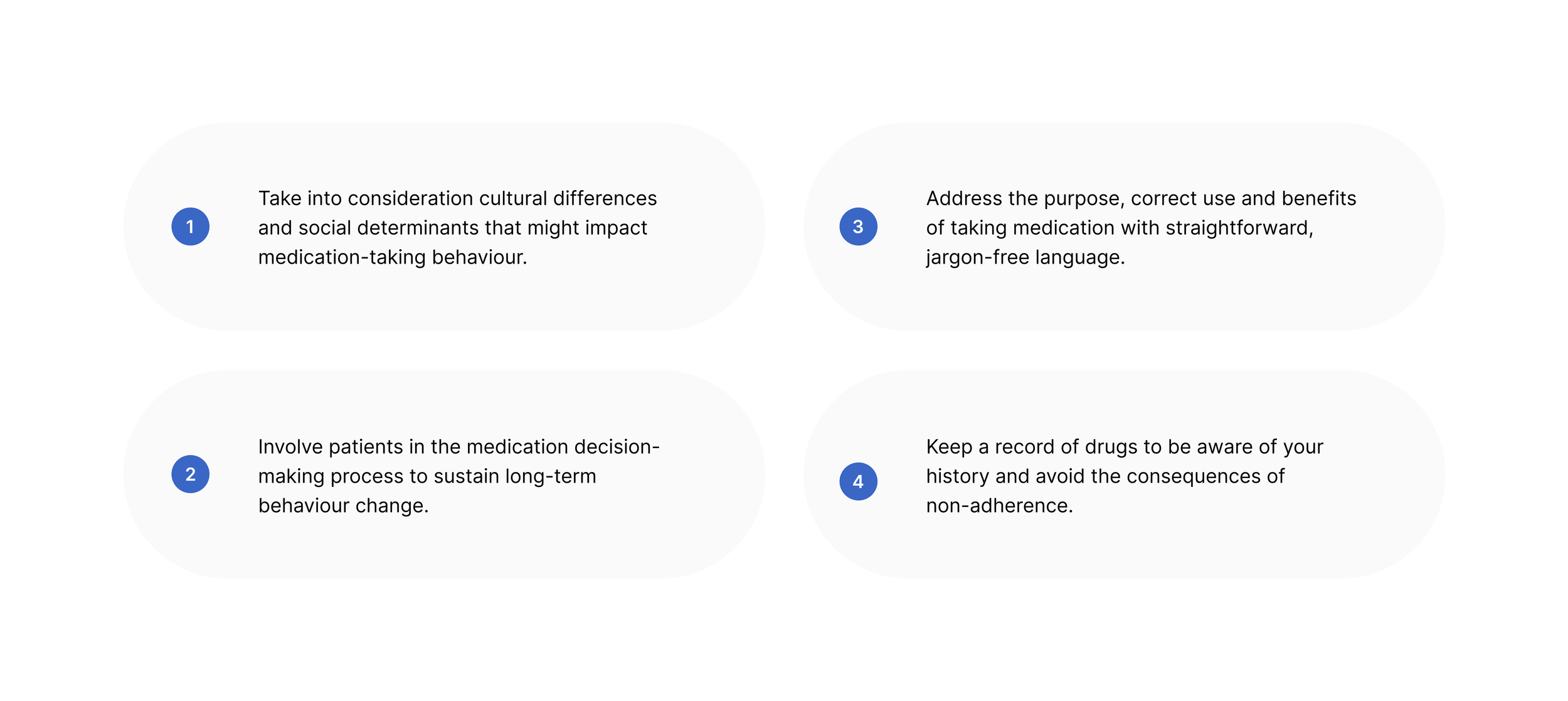
Based on the insights, I came up with four goals to guide me through the development process.
Setbacks to Opportunities
Constraints created a space for me to understand the user environment firsthand. The covid-19 crisis limited resources and activities that required in-person interaction. group activities were replaced with remote calls and emails, and the barrier became more evident. On the positive side, the constraints I had to work around allowed me to empathize with the user group more deeply.
“I could sometimes feel the user’s frustration in not being able to express their point clearly in English, but even more so because it was over the phone.”
Responding to feedback
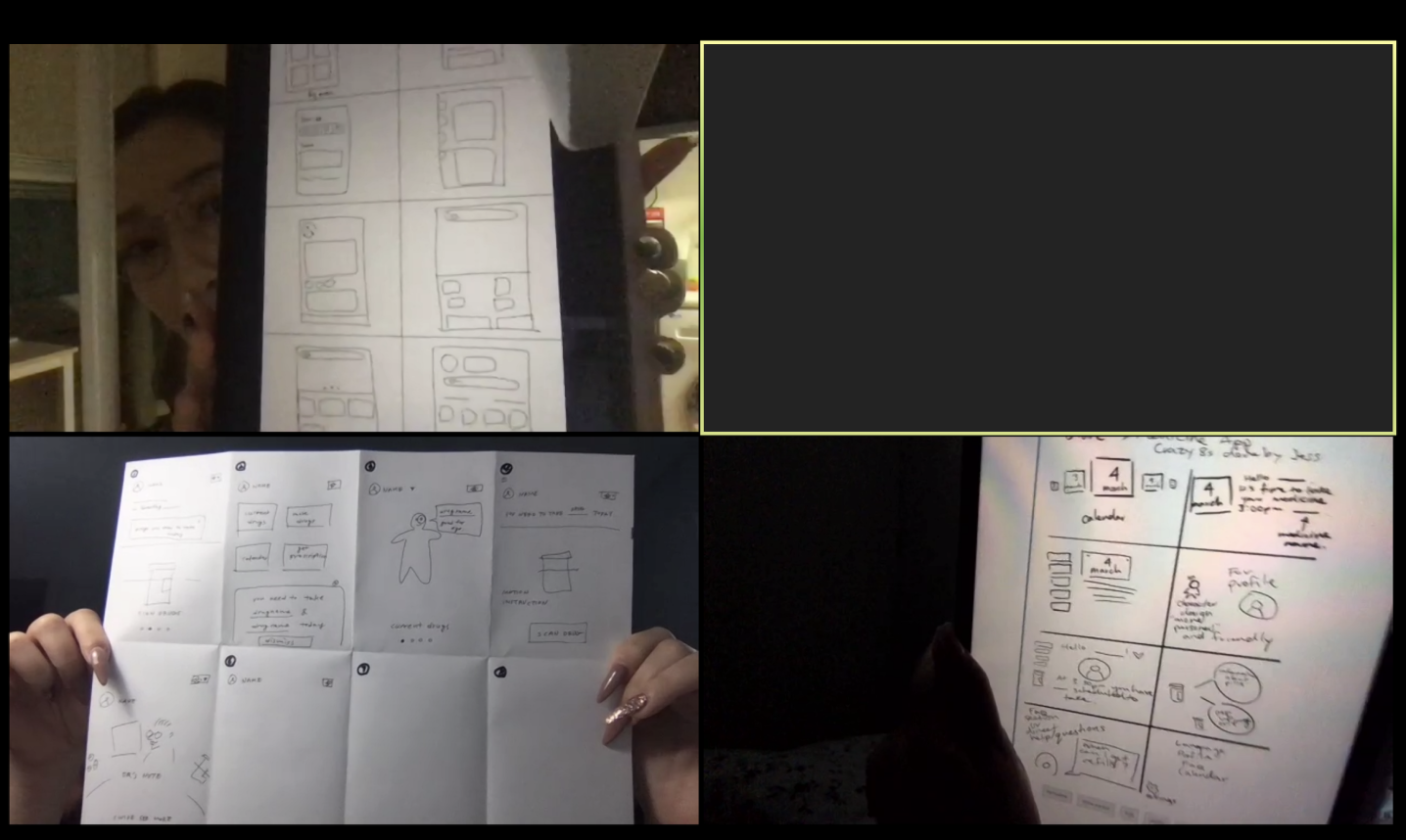
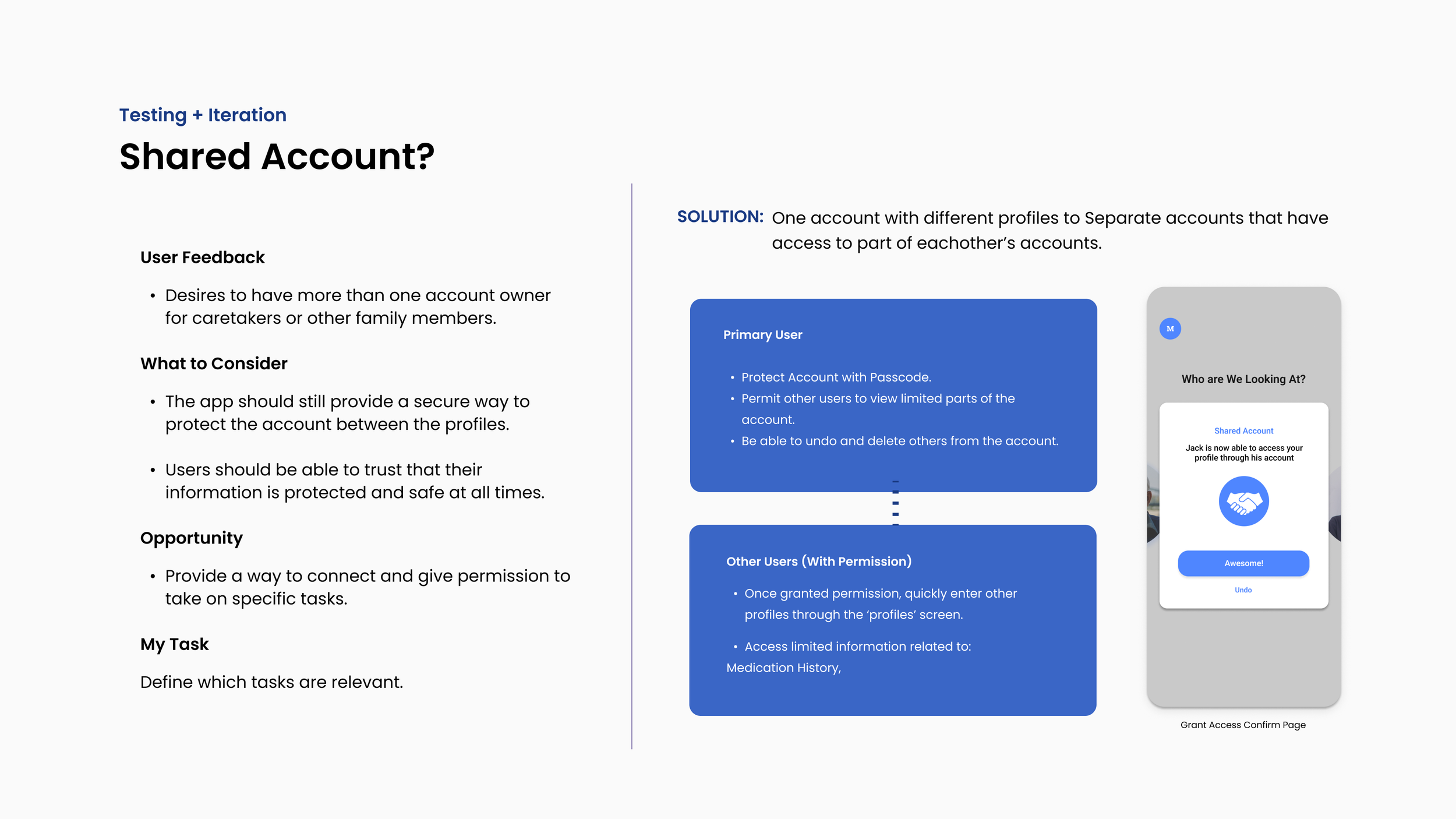
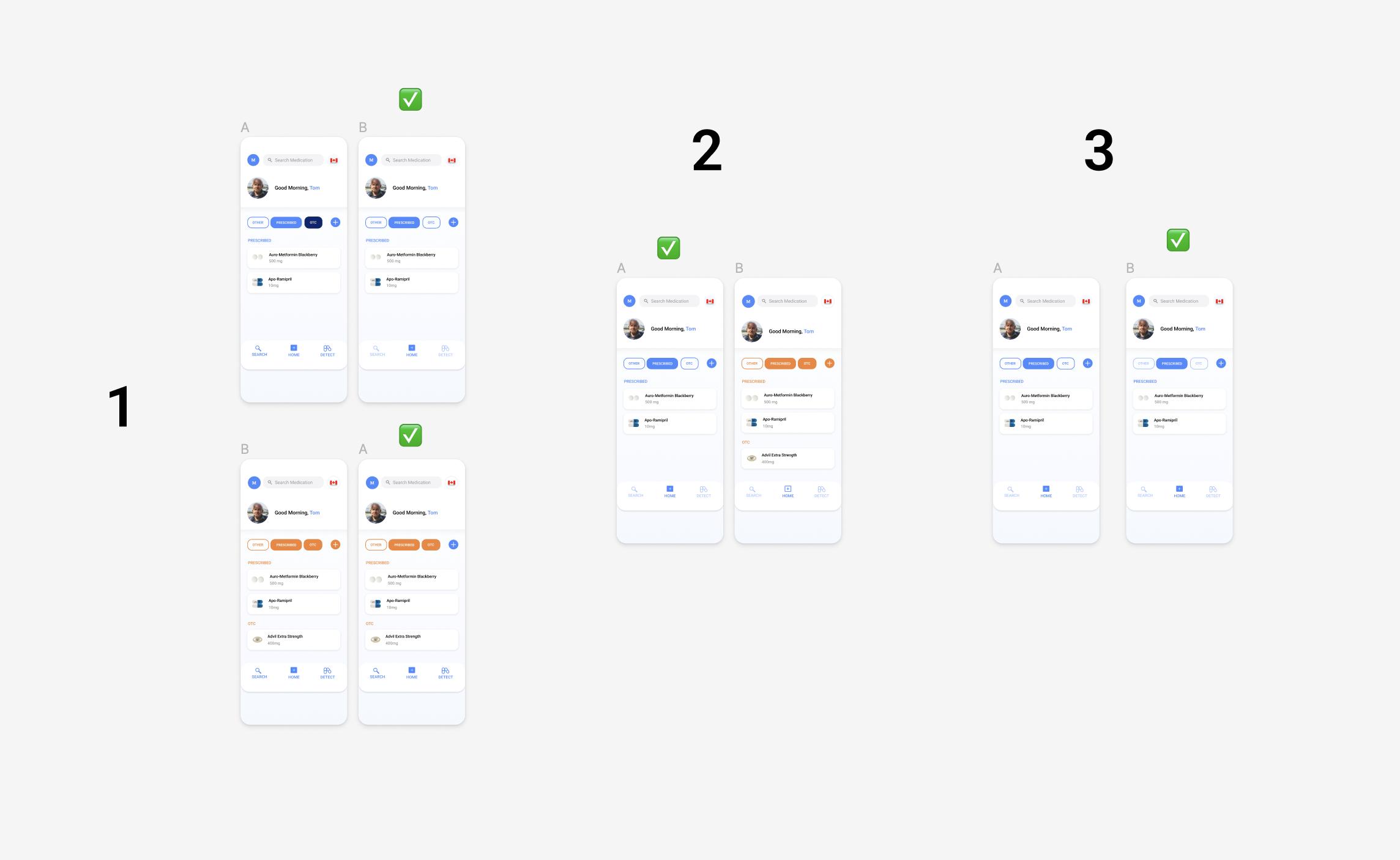
I continued to iterate and improve my design with feedback from peers, potential users, and mentors throughout the process.
Information Architecture
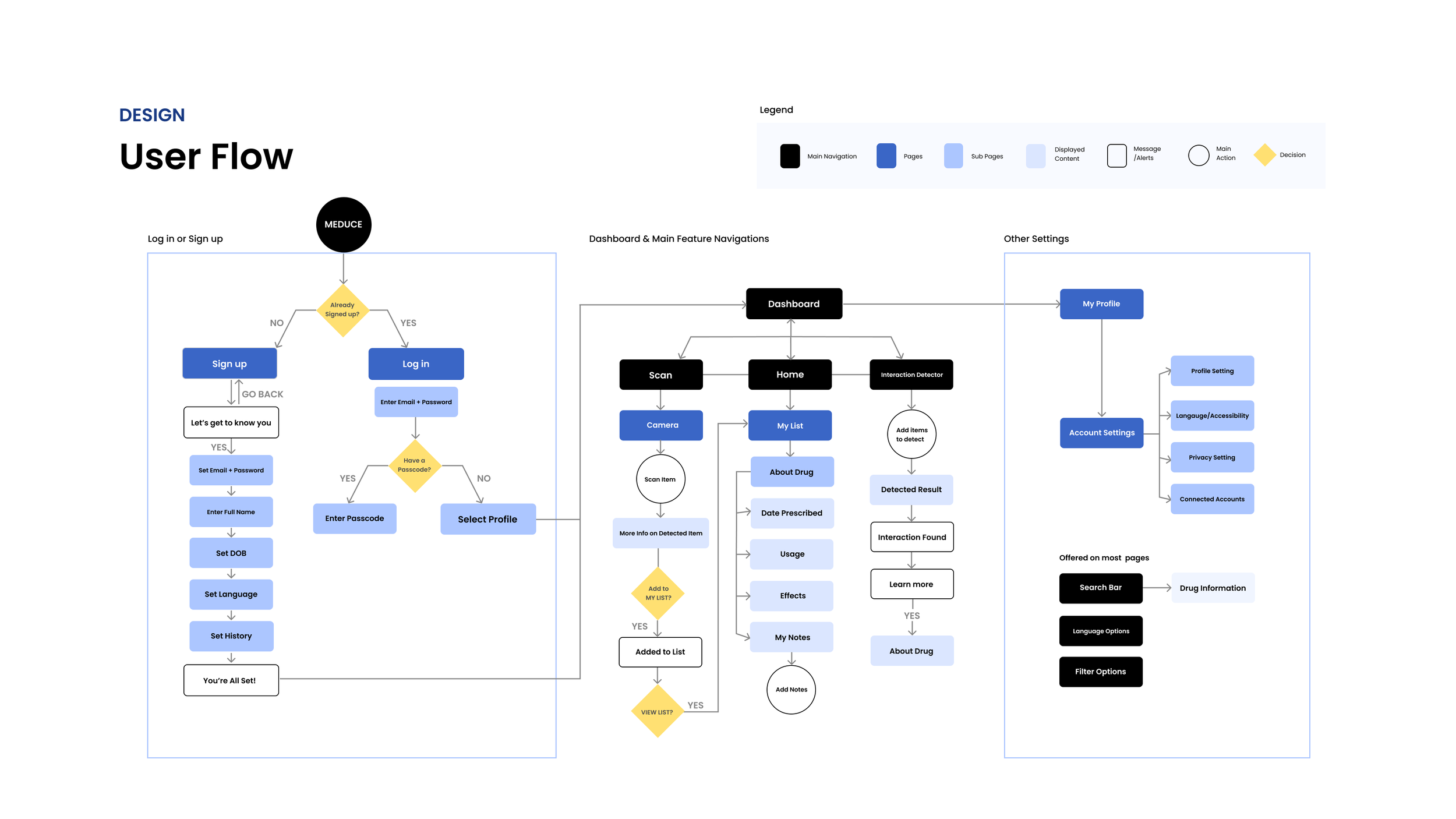
Sketching out imagined user journeys with potential users helped me narrow down features and group content. Through these sessions, I was able to build out a logical and meaningful structure for Meduce that respects the user’s mental model.
Color and Typography
Users may want/need to consume a lot of information while using Meduce. I tried to maintain a clean and simple UI (colours used for specific purposes only, right fonts for accessibility) so it does not interfere with the overall experience.
Figma Prototype
FINAL THOUGHTS
Takeaway
Having been someone who has seen the scale of this problem so close by, I was continuously motivated to develop it into something that I genuinely believe will fulfill the needs of many people.
LESSONS LEARNED💁♀️
Include users during every step 👣- I tried to constantly remind myself that “I am not the user” to avoid assuming what might and might not work but reach out to others.
dive deep rather than too wide 🏊🏽♂️ - At one point, I found myself trying to solve and respond to every little issue found in the problem, which just led to an overload of information. As much as it’s beneficial to consider all needs and reach as many people as possible, I tried my best to focus and define what was really important for the user by being insight-driven.
Be Flexible ✨ - Since this was the first significant project while the covid-19 restrictions were in place, users and I were being introduced to and adapting to new ways of research and testing along the way. I learned to be flexible and work around real-world situations that arise.